
You’ve decided on a sew-in or a wig, and now the stylist asks: frontal or closure? It sounds like a small detail, but the answer shapes how your hair looks, how many ways you can part it, and how much time you’ll spend maintaining it. Both can give a natural-looking finish. They differ in coverage, styling flexibility, installation, and upkeep. This guide breaks down lace frontal vs lace closure so you can choose with confidence, not guesswork.
What Is a Lace Closure?
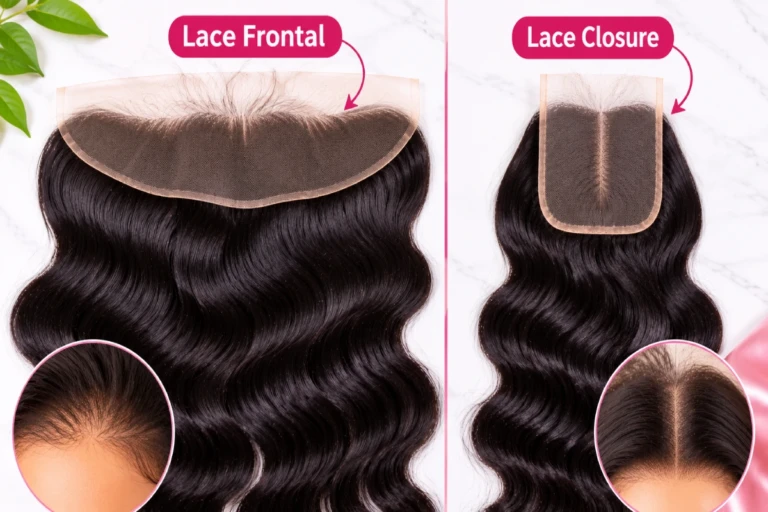
A lace closure is a small lace hairpiece that covers a specific area of the scalp, usually the crown or parting area, so no natural hair is left exposed. It finishes a sew-in neatly and gives you a believable part. Common closure sizes are 2×6, 4×4, 5×5 and 6×6. The parting space depends on the size and how the closure is made, so a bigger piece generally gives you more room to move your part.
What Is a Lace Frontal?
If you’re wondering what a lace frontal is, think of it as a wider lace piece that generally runs across the front hairline from ear to ear. That extra width lets you change your part, sweep hair away from your face, and style the front in more ways than a closure usually allows. The most common sizes are 13×4 and 13×6. Compared with a closure, a frontal covers much more of the hairline, though it doesn’t cover the crown or back on its own.
Lace Frontal vs Lace Closure: Key Differences
Here’s how the two compare at a glance.
| Feature | Lace Closure | Lace Frontal |
| Lace coverage | Small area at the crown or part | Ear to ear across the hairline |
| Typical sizes | 2×6, 4×4, 5×5, 6×6 | 13×4, 13×6 |
| Parting flexibility | Limited by size | Much greater |
| Hairline customization | Limited | Extensive |
| Installation | Simpler, quicker | More detailed, longer |
| Maintenance | Usually lighter | Needs more hairline attention |
| Cost | Often lower | Often higher |
| Beginner-friendly | Generally yes | Takes more practice |
In short, a closure is simpler and more contained, while a frontal gives you more freedom at the price of more work.
Lace Closure vs Frontal: Size and Coverage Explained
Lace dimensions decide how much scalp and hairline is covered, and they’re the first thing to check when comparing options. Here’s how the common sizes differ.
Common Lace Closure Sizes
A 2×6 closure is a narrow strip suited to a simple middle part. A 4×4 lace closure covers a small square, giving a little room for a middle or slight side part. A 5×5 lace closure adds more parting space and a bit more styling freedom, while a 6×6 offers the most room of the group. Closure size also influences how much additional hair you may need for a complete installation. If you’re planning a sew-in, understanding how many bundles you need for a full head can help you choose the right amount of hair.
Common Lace Frontal Sizes
A 13×4 lace frontal spans the hairline and is about four inches deep, which is enough for most side parts and middle parts. A 13×6 lace frontal is deeper, giving more parting space and more room to pull hair back. Bigger doesn’t automatically mean better, though. Lace quality, knot work and how well it matches your skin matter just as much as the dimensions.
Lace Frontal vs Closure: Styling Versatility
A frontal generally offers more styling freedom. You can part it in different places, sweep it to one side, and in many cases pull it back into certain ponytails or half-up styles. A closure works best for consistent looks, like a middle part or a fixed side part, and it’s easy to wear that way day after day. Keep in mind that your actual options depend on the lace design, the density and how the piece is installed.
Lace Frontal vs Lace Closure Installation
Both start with a prepared foundation, such as braids, a wig cap or cornrows, then the lace is positioned, secured and blended into the hairline. A closure is usually quicker because the area is smaller, while a frontal takes more care around the edges, which can make installation longer. Adhesive isn’t mandatory. Some installs use glue, while others are glueless, using sewn-in or band-based methods. Whichever route you choose, a skilled stylist makes a big difference to how natural the final result looks.
Which Looks More Natural: Lace Frontal or Lace Closure?
Both can look natural, but neither is guaranteed to be invisible. Lace quality, knot visibility, density, hairline customization and the installer’s technique all shape the result. HD lace is thinner and blends more easily across skin tones, transparent lace is slightly more visible but sturdier, and regular lace is the most noticeable but often the most durable. Understanding construction helps, so this guide on how to choose high-quality hair extensions covers what to look for.
Frontal vs Closure: Pros and Cons
Neither option is universally better. Here’s a balanced look at each.
| Lace Closure | Lace Frontal | |
| Pros | Simpler to install, lighter upkeep, usually cheaper, comfortable | Wider coverage, flexible parting, customizable hairline, versatile styling |
| Cons | Fixed or limited parting, smaller coverage | Longer install, more upkeep, higher cost, hairline needs attention |
How Long Do Lace Frontals and Closures Last?
It helps to separate two things: how long an installation can be worn and how long the lace piece itself stays usable. An installation usually needs refreshing sooner than the hairpiece wears out. Lifespan depends on the adhesive or method used, hair quality, handling and maintenance. With careful removal and gentle care, a good frontal or closure can sometimes be reused. There’s no single guaranteed lifespan, so treat any exact number as a rough guide.
Frontal vs Closure: Maintenance and Hair Care
Be gentle with the lace, avoid pulling too tight and detangle from the ends upward. Clean away product buildup so the lace stays comfortable and the hair stays fresh. At night, protect the install with a satin bonnet or pillowcase. Frontals tend to need more frequent attention at the hairline, because the lace sits across a larger edge area. Gentle styling habits help both options last longer and keep your own hair healthier underneath.
Lace Frontal vs Lace Closure: Which Is More Affordable?
Closures are usually the cheaper choice. A frontal costs more upfront because it uses more lace and more hair, and professional installation often takes longer too. Add the cost of adhesive or maintenance products and any reinstall appointments, and the gap can widen. Prices vary widely by product and stylist, so compare quotes rather than relying on averages. A cheaper piece isn’t always better value if it sheds or wears out quickly.
How Many Hair Bundles Do You Need With a Frontal or Closure?
The number of bundles depends on lace coverage, hair length, head size and how full you want the result. Longer lengths and fuller looks usually need more hair, while a frontal can reduce the amount you need around the hairline. There’s no universal quantity, so ask your stylist to estimate. Matching texture and density is just as important. For example, Cambodian raw natural wave hair bundles are listed for both closure and frontal installations.
Lace Frontal vs Lace Closure: Which One Should You Choose?
Start with how you actually wear your hair. If you like a steady part, want simpler upkeep and are new to lace, a closure is a practical starting point. If you change your hairstyle often, want more hairline coverage and don’t mind extra care, a frontal gives you more room. Budget and scalp sensitivity matter too. Wigs are another route, such as the Whitney custom wig with a 5×5 HD lace closure, which shows closure-based wig construction. It’s a custom unit service, not a standalone closure.
Common Mistakes to Avoid When Buying a Frontal or Closure
The most common slip is buying the wrong lace size for the style you want, such as a small closure when you want a deep side part. Others include ignoring hair density, picking lace that doesn’t match your skin tone, overlooking upkeep and mixing textures that don’t blend. To avoid them, measure your hairline, check the lace color and density, and confirm that the bundles match the texture of the piece before you buy.
Frequently Asked Questions About Lace Frontals and Closures
What is the main difference between a lace frontal and a lace closure?
A frontal covers the hairline ear to ear with more styling options. A closure covers a smaller area.
Is a lace closure better than a frontal for beginners?
Often, yes. Closures are simpler to install and usually need less upkeep than frontals.
Which lasts longer, a frontal or closure?
It depends on care. Installation wear time differs from how long the piece itself stays usable.
Can you wear a lace frontal without glue?
Yes. Glueless methods like sewn-in or band-based installs can work, depending on the unit.
Can you make a side part with a lace closure?
Sometimes. Parting options depend on closure size and construction, so larger closures offer more room.
Is a 5×5 closure better than a 4×4 closure?
Not always. A 5×5 gives more parting space, while a 4×4 may suit simpler styles.
Does a lace frontal damage your edges?
It can if tension, adhesive or rough removal are involved. Gentle installation and removal help.
Can you reuse a lace frontal or closure?
Often, with quality hair and careful removal. Poor handling shortens reuse.
Which is more expensive, a lace frontal or closure?
Frontals usually cost more because they use more lace and take longer to install.
Is HD lace better than transparent lace?
HD lace blends more easily but is more delicate. Transparent lace is slightly more visible but sturdier.
Find the Right Lace and Hair for Your Next Install
Choosing between a lace frontal and a closure comes down to how you actually wear and maintain your hair. A closure suits someone who prefers a consistent part and a simpler routine, while a frontal suits someone who changes styles often or wants more hairline coverage. Whichever you pick, lace quality, a comfortable installation and well-matched hair texture matter just as much as the piece itself. Think about the complete install too, including bundles, desired length and upkeep, rather than focusing only on the lace. When you’re ready to find hair that complements your chosen piece, explore hair extensions in a texture and length that suits you. Choose according to your styling habits and the time you’re willing to spend on care, not simply what’s popular, and you’ll end up with a look that works for you.
Share this Article
Facebook
LinkedIn
WhatsApp
Email
Print
Latest Posts




Find the perfect hair for your next look?
Explore a curated selection of premium extensions and wigs from trusted vendors on NiCa Collection.
Read Related Blog
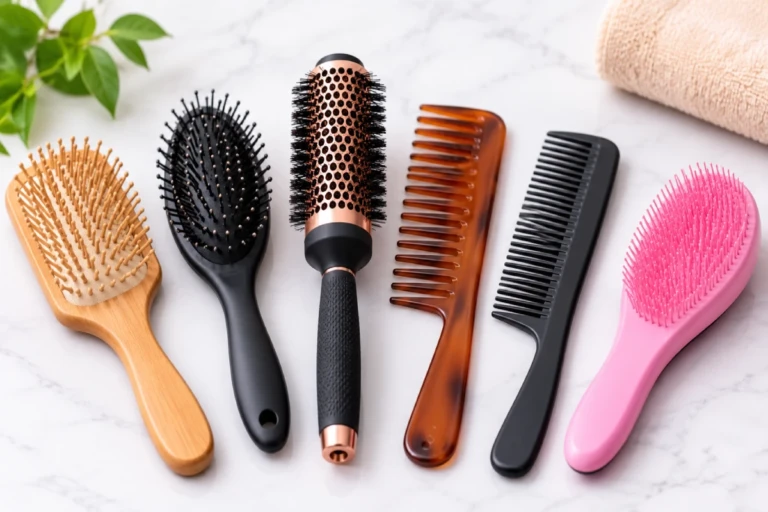
Different Types of Hair Brushes: Which Hair Brush Should You Use?
November 14, 2026
You buy a beautiful brush, and it glides through your friend’s straight hair. Then you try it on your curls or your clip-in extensions, and it snags, stretches the strands,

Quick Weave: Hairstyles, Types & How to Do It
November 5, 2026
A quick weave is one of the fastest ways to completely change your look. No hours-long braiding session or needle and thread, just a prepared foundation, a few rows of

Best Hairstyles for Every Face Shape
October 25, 2026
Choosing a hairstyle for your face shape comes down to balance. Every haircut adds lines, volume, and shape around the face, and those details can make certain features stand out