
Hair extensions used to feel like a celebrity secret. Now they sit in bathroom drawers everywhere, worn to weddings, job interviews, holidays, and ordinary Tuesdays when you just want your hair to look like it did in that one photo from three years ago.
The problem is choice. Search once, and you will meet clip-ins, tape-ins, sew-ins, fusion bonds, micro rings, halos, and ponytails, all promising the same thing in completely different ways. If you are just starting your hair extension journey, it is genuinely hard to know where to begin.
Here is an easy way to think about it. The different types of hair extensions differ mainly in two ways: how they attach to your hair, and how long they stay there. Once you understand those two variables, the whole category stops feeling like a maze.
This guide walks through every major method in plain language, with honest pros and cons for each. We will cover which types of hair extensions suit fine hair, which suit thick hair, what beginners should try first, and how to care for whatever you choose so it lasts. No jargon, no pressure, just the kind of advice a stylist would give a first-time client sitting in their chair.
What Are Hair Extensions?
Let us start with the basics, because plenty of first-time buyers are too polite to ask. So what are hair extensions, exactly?
Hair extensions are additional strands of hair, either human or synthetic, attached to your natural hair to add length, thickness, or colour. They come as wefts (long strips of hair) or as individual strands, and they attach using clips, tape, thread, keratin bonds, beads, or a hidden wire.
People wear them for very different reasons. Some want length while growing out a short cut. Others have fine hair and want a fuller ponytail. Many want highlights or a bold colour without committing to dye and the damage that comes with it.
Then there are the occasion buyers, the ones who order a set two weeks before a wedding and end up wearing them every month afterwards. All of these are good reasons, and each one points toward a different extension type.
What Are the Different Types of Hair Extensions?
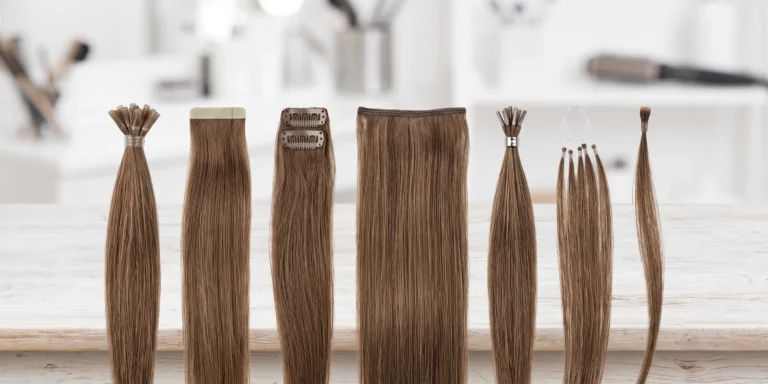
There are seven methods you will encounter most often. Some are temporary and take minutes. Others are semi-permanent and need a stylist.
| Type | Attachment | Wear Time | Applied By |
| Clip-In | Pressure clips | Hours, removed daily | Yourself |
| Tape-In | Adhesive wefts | 6 to 8 weeks | Stylist |
| Sew-In (Weave) | Sewn into braids | 6 to 8 weeks | Stylist |
| Fusion (Keratin) | Heat-bonded strands | 3 to 4 months | Stylist |
| Micro Ring (I-Tip) | Metal beads | 2 to 3 months | Stylist |
| Halo | Hidden wire | Hours, removed daily | Yourself |
| Ponytail | Wrap or claw clip | Hours, removed daily | Yourself |
Now let us look at each one properly, starting with the method almost every beginner tries first.
Clip-In Hair Extensions
“Can I do this myself at home?” is the most common question first-time buyers ask, and clip-ins are the answer.
Each weft has small pressure-sensitive clips along the top edge. You section your hair, open the clips, press them shut over a thin layer of your own hair, and blend. The whole process takes ten to fifteen minutes once you have practised twice.
Pros: No salon appointment, no adhesive, no commitment, fully reusable, and easy on the budget over time.
Cons: You have to apply them daily if you want daily length, and they must come out before bed.
Best for: Beginners, occasional wear, events, travel, and anyone who likes changing their look often.
Maintenance: Low. Wash every fifteen to twenty wears and store flat.
If you want the same length every morning without the daily routine, the next option is where most people move on to.
Tape-In Hair Extensions
Tape-ins are thin wefts backed with medical-grade adhesive. A stylist sandwiches a fine section of your natural hair between two wefts so they lie completely flat against the scalp.
They are popular because they are barely noticeable. There is no bulk at the root, nothing to feel when you run your hand through your hair, and no visible attachment when you part it or tie it up.
Pros: Lightweight, natural-looking, comfortable for daily wear, and reusable across several fittings.
Cons: Professional application and removal, plus a refit every six to eight weeks as your hair grows.
Best for: Fine to medium hair and anyone wanting an everyday solution rather than an occasional one.
Thicker hair types often need something with more grip, which brings us to sew-ins.
Sew-In (Weave) Hair Extensions
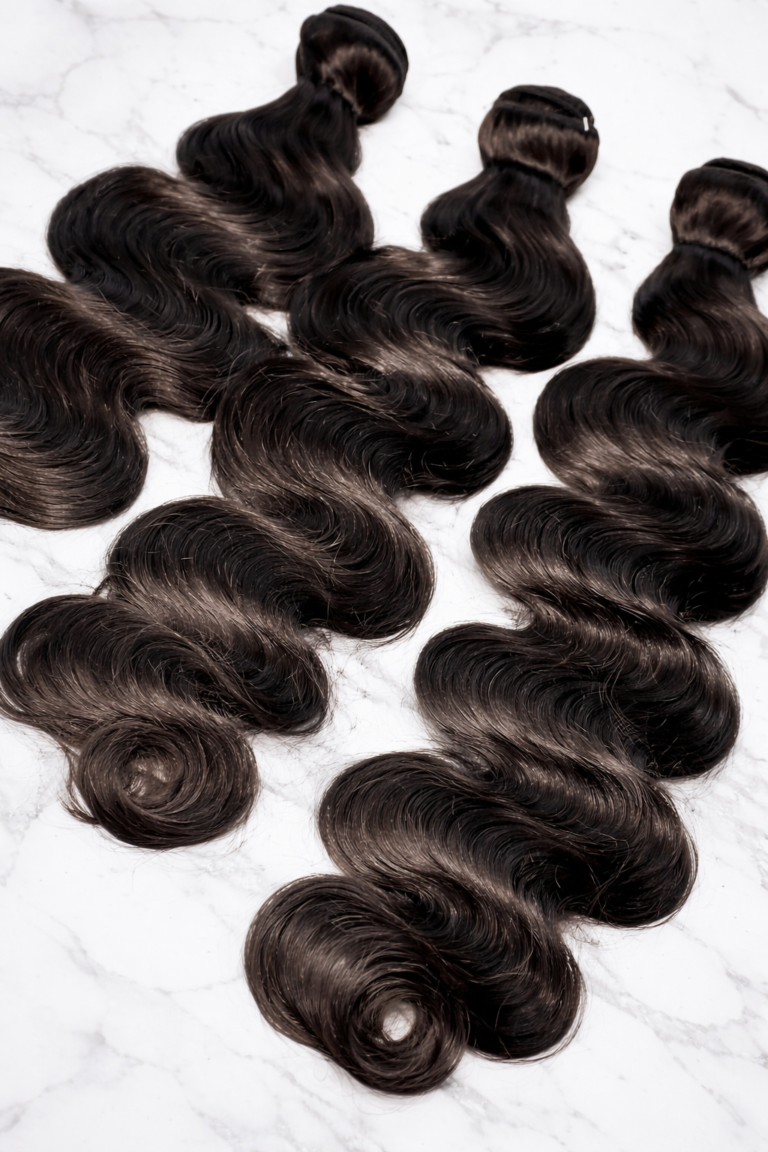
With a sew-in, your natural hair is braided into cornrows and wefts are stitched onto those braids using a needle and thread. No glue, no heat, no chemicals.
This method works best on thick, coarse, or textured hair that can support the tension of braiding. It is a poor match for very fine hair, where the braids can cause stress at the root.
Pros: Very secure, protective for natural hair underneath, and long-wearing.
Cons: Several hours to install, needs a skilled stylist, and the scalp needs proper cleansing care.
If you are curious about how much hair a full sew-in actually needs, this guide on how many bundles you need for a full head is worth reading before you buy. And if you are weighing braided styles more generally, the complete guide to box braids covers the protective styling side.

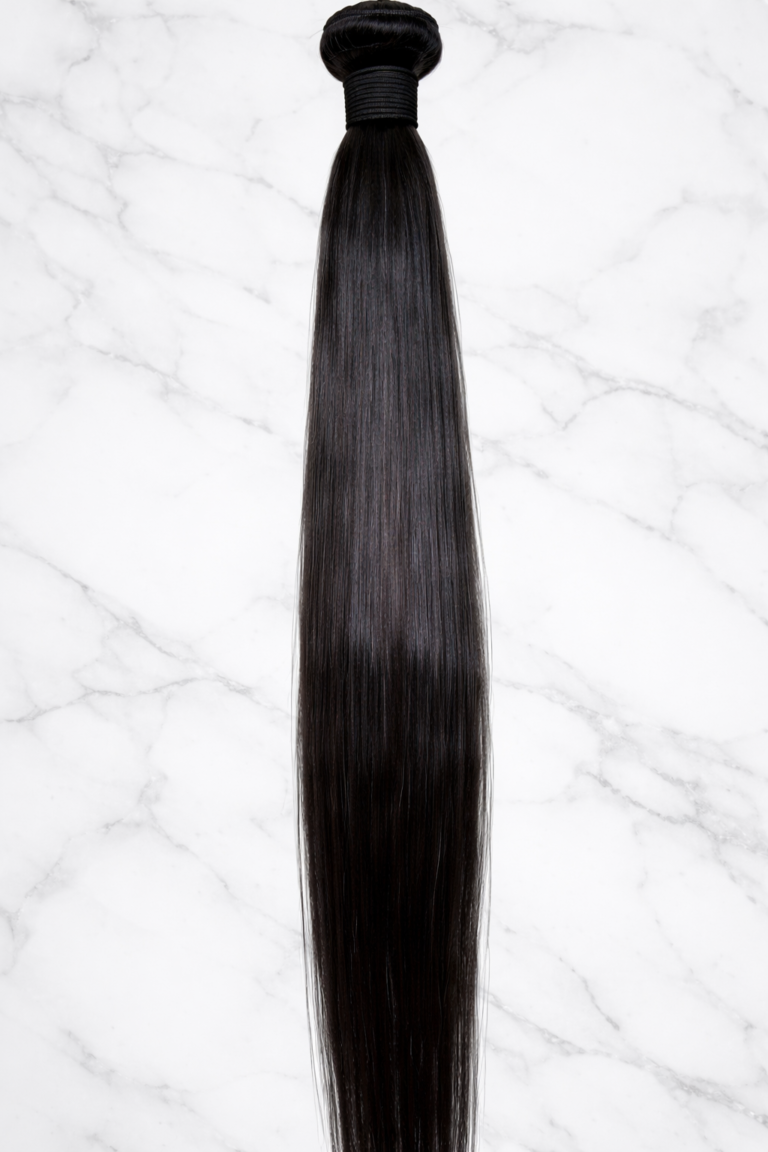

Fusion (Keratin Bond) Extensions
Fusion is the most detailed method on this list. Small strands of hair, each tipped with keratin, are bonded to tiny sections of your own hair using a heat tool. A full head can mean 100 to 200 individual bonds.
The payoff is movement. Because each bond is so small, the hair falls and swings exactly like natural hair, which is why fusion is often chosen for photography and long-term wear.
Pros: The most natural movement, three to four months of wear, and total styling freedom.
Cons: Expensive, three to five hours to install, and removal requires a professional solvent.
Best for: Healthy medium to thick hair and people committed to long-term extensions.
For similar longevity without heat or glue, micro rings are the alternative worth knowing.
Micro Ring (I-Tip) Extensions
Micro rings, also called I-tips or micro links, use tiny metal beads instead of adhesive. A strand of extension hair and a section of your own hair are threaded through a bead, which is then clamped shut with pliers.
Nothing is heated, and nothing is glued, which is why this method appeals to people worried about chemical damage. The beads are also reusable, so refits cost less over time.
Pros: No glue or heat, reusable hardware, and a natural finish when fitted correctly.
Cons: Beads can slip if fitted too loosely or cause tension if fitted too tightly. Technique matters enormously here.
If this method interests you, the microlink installation guide walks through the full process step by step.
All three of those methods need a salon. The next two do not.
Halo Hair Extensions
Halo extensions are the best-kept secret in the beginner category. A single weft sits on an invisible wire that rests on your head like a headband, hidden under the top layer of your own hair.
Nothing clips, sticks, or pulls. You lift the top section, place the wire, drop your hair back down, and you are finished in under a minute.
Pros: The fastest method available, zero tension on the roots, and genuinely damage-free.
Cons: Adds length and volume in one horizontal band, so it works less well for very thick hair or high ponytails.
Best for: Complete beginners, fine hair, and anyone nervous about damage.
Ponytail Hair Extensions
A ponytail extension is a single piece that wraps or clips around your own gathered ponytail. Two minutes of effort turns a thin, short ponytail into a full one.
They are the go-to for gym days, weddings, and any occasion where you want one polished style rather than a whole new head of hair.
Pros: Instant volume, minimal effort, easy to store, and low maintenance.
Cons: Only works for one hairstyle.
Whichever method appeals to you, the material the hair is made from matters just as much as the attachment.
Human Hair vs Synthetic Hair Extensions
Many first-time buyers are surprised to learn how much this single decision affects their experience.
| Factor | Human Hair Extensions | Synthetic Extensions |
| Appearance | Moves and reflects light naturally | Can look glossy or flat in daylight |
| Heat styling | Straighten and curl as normal | Limited or not at all |
| Longevity | 6 to 12 months or longer | 1 to 3 months |
| Cost | Higher upfront | Low upfront |
| Maintenance | Wash and condition like your own hair | Minimal, but wears out faster |
| Colouring | Can be toned or darkened | Cannot be coloured |
| Overall value | Best long-term investment | Fine for one-off or costume use |
Synthetic hair has its place. For a themed party or a colour you will wear once, it is a sensible, low-cost choice. But if you plan to wear extensions regularly, human hair extensions repay the higher price several times over in styling freedom and lifespan.
Which Hair Extension Type Is Best for Beginners?
Here is the short version, sorted by what people usually ask for.
- Best for everyday wear: Tape-ins
- Best for special occasions: Clip-ins or a ponytail piece
- Best for thin hair: Tape-ins or halo
- Best for thick hair: Sew-in or fusion
- Best for budget buyers: Clip-ins
- Lowest maintenance: Halo
- Most natural look: Fusion or tape-ins
Which Hair Extension Is Right for Me? Quick Checklist
- Is this your first set? Start with clip-ins or a halo.
- Do you want length every single day? Tape-ins.
- Is your hair fine or fragile? Tape-ins or halo, not sew-ins.
- Is your hair thick and coarse? Sew-in or fusion.
- Do you want to avoid salon visits entirely? Clip-ins, halo, or ponytail.
- Do you want the most undetectable finish? Fusion or tape-ins.
- Do you mostly want a fuller ponytail? Buy the ponytail piece and stop there.
Pro Tip: Buy one shade lighter at the ends rather than one shade darker overall. Extensions that are slightly brighter than your mid-lengths read as natural highlights, while extensions that are too dark look like a block of separate hair.
Knowing what to buy is half the job. Avoiding the usual traps is the other half.
Common Mistakes Beginners Make
Common Mistake: Choosing on price alone. Cheap hair is usually processed heavily, coated in silicone to feel soft in the packet, and then tangles within three washes once that coating rinses away. It is the single most common regret we hear from first-time buyers.
The other mistakes worth avoiding:
- Matching colour against your roots instead of your mid-lengths and ends.
- Skipping maintenance appointments for tape-ins, sew-ins, or bonds.
- Sleeping in clip-ins, halos, or ponytail pieces.
- Using heat tools at maximum temperature.
- Washing extensions as often as you wash your own hair.
If colour matching is the part you are least confident about, the find your perfect match tool takes the guesswork out of it.
How to Care for Hair Extensions
Extensions never receive natural oils from your scalp, so everything they get, they get from you.
Washing – Use sulphate-free shampoo and cool water. Temporary sets need washing only every fifteen to twenty wears. Permanent methods should be washed no more than two or three times a week, keeping conditioner away from the attachment points.
Brushing – Use a loop brush and always start at the ends, working upward in small sections.
Heat styling – Stay at or below 180 degrees Celsius and always use a heat protectant. Never apply direct heat to tape bonds, keratin bonds, or beads.
Sleeping – Remove temporary sets every night. For permanent methods, braid loosely and use a silk pillowcase.
Storage – Keep clip-ins and halos flat or hanging in a fabric bag rather than folded in a drawer.
Avoid: Sulphates, heavy silicones, alcohol-based sprays, and purple shampoo used too often on blonde sets.
Good care extends the life of any set. Good sourcing decides how good that set was to begin with.
Why Choose The NiCa Collection?
Buying extensions online has always had one uncomfortable variable: you cannot touch the hair before it arrives. That is exactly the gap The NiCa Collection was built to close.
Rather than a single store, NiCa is a curated marketplace that connects verified hair extension and wig vendors with stylists and customers in one place. Every vendor goes through a multi-step quality and review process, so the products you browse have already been filtered for authenticity and craftsmanship.
The smart matching system helps you narrow choices by type, length, colour, and texture instead of scrolling endlessly. Stylists use the same platform their clients do, which keeps standards honest, and buyer protection covers your purchase either way.
Have a look through the full marketplace of premium hair extensions when you are ready, or read how to choose high-quality hair extensions first if you want a deeper buyer’s checklist.
Frequently Asked Questions
What are hair extensions?
Hair extensions are human or synthetic strands attached to natural hair to add length, volume, or colour without chemical dye.
What are the different types of hair extensions?
The main types are clip-in, tape-in, sew-in, fusion, micro ring, halo, and ponytail extensions, each attaching differently.
Which hair extensions are best for beginners?
Clip-in and halo extensions are best for beginners. Both apply in minutes at home with no glue or salon visit.
What’s the difference between clip-in and tape-in extensions?
Clip-ins are temporary and applied daily at home. Tape-ins are semi-permanent, fitted by a stylist, and worn for six to eight weeks.
Which extensions last the longest?
Fusion or keratin bond extensions last the longest in the hair, staying in place for roughly three to four months per fitting.
Are human hair extensions worth it?
Yes, for regular wear. They can be heat-styled and toned, and last six to twelve months versus weeks.
Can I style hair extensions with heat?
Human hair extensions handle heat below 180 degrees Celsius with protectant. Synthetic extensions usually cannot be heat styled at all.
Which extensions work best for thin hair?
Tape-in and halo extensions suit thin hair because they distribute weight evenly without creating tension at the roots.
How often should extensions be maintained?
Tape-ins and sew-ins need refitting every six to eight weeks. Micro rings every two to three months, fusion every three to four.
Which extensions should I buy from The NiCa Collection?
Use the match tool to filter by type, length, colour, and texture, then choose from verified vendors within your budget.
Final Thoughts
There is no single best extension, only the best one for your hair, your routine, and your budget. Once you understand the different types of hair extensions and how each one attaches, choosing becomes far less intimidating than it looks from the outside.
If you are new, start with temporary. Clip-ins and halos let you learn what length and volume actually suit you before you commit to a semi-permanent method and a salon schedule. Plenty of people stay with them permanently and never feel they missed out.
Whatever you choose, put your money into quality hair rather than quantity. Premium human hair styles better, blends better, and stays beautiful long after cheaper sets have gone dull. Explore The NiCa Collection’s verified vendors and find the set that fits the life you actually live.



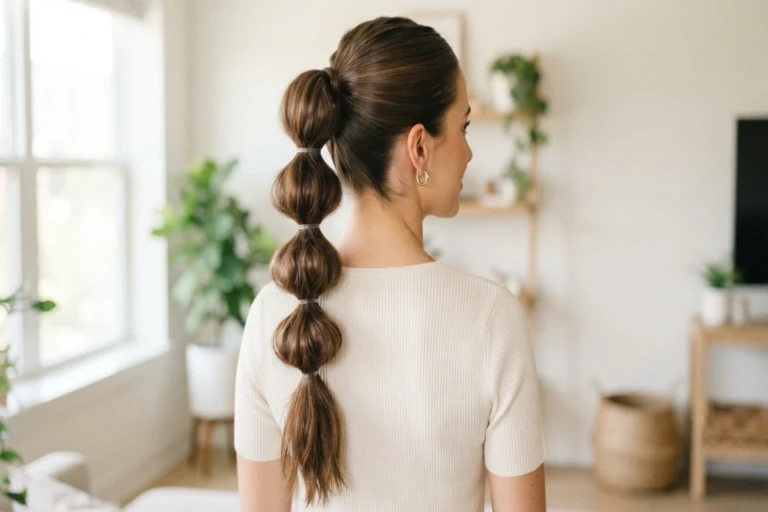
Bubble Ponytail: How to Do It Step by Step
A bubble ponytail looks like it takes skill, but it is one of the easiest styles you can do at home. Nothing is braided. Nothing is twisted. You gather your
What is Weft Hair? Types, Benefits, Installation & Care
If you have spent any time researching hair extensions, you have run into the term weft hair. A weft is a row of hair strands joined together along one edge
3A vs 3B vs 3C Curls: Key Differences You Should Know
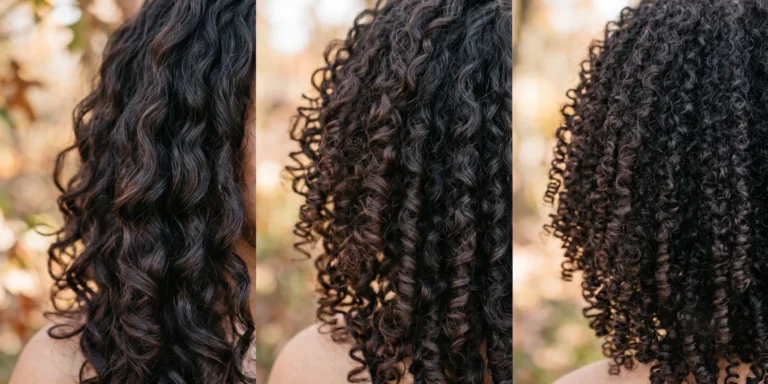
The difference comes down to curl size and tightness. 3A curls are loose and large, roughly the width of a piece of sidewalk chalk. 3B curls are tighter and springier,