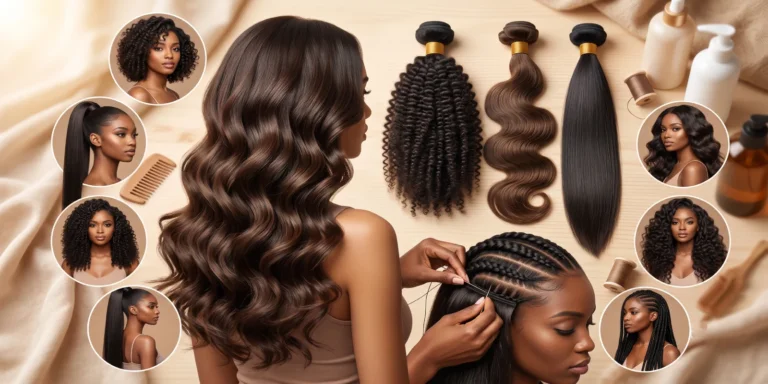
A hair weave is hair attached to your natural hair to create length, volume, a different texture, or a completely different hairstyle. It is one of the most familiar ways people change their look without cutting, colouring, or chemically treating their own hair.
Weave hair comes in different constructions, textures, and qualities, and it can be installed in several ways. Those choices are what decide how the finished style looks, how long it lasts, and how much upkeep it needs.
This guide covers weave hair meaning, the main types of weave hair, how weave hairstyles are created, the styles people ask for most often, and how to choose and care for the hair once it is in.
What Is Weave Hair?
Weave hair is hair, either human or synthetic, that is attached to your natural hair rather than growing from your scalp. It is usually supplied in bundles of hair sewn along a track, then secured to your own hair in rows.
Attachment is what separates a weave from a wig. A wig sits over your hair; a hair weave is joined to it, so your own hair holds the extensions and is left out in sections on top to cover the tracks and blend everything.
People reach for a hair weave to add length when growing hair out feels slow, to build volume that fine hair cannot create on its own, to change texture without chemicals, or to wear a style their current length rules out.
What Does Weave Hair Mean?
If you had to define weave hair in one sentence: hair that is woven, sewn or bonded into your existing hair to change how it looks. The word “weave” points to the traditional method of stitching hair onto braided sections, though the term now covers several installation styles.
What Is a Weave Hairstyle?
A weave hairstyle is any finished look built with added hair rather than your natural hair alone. It comes from three things: the texture you choose, where the rows are placed, and how the hair is cut afterwards. You are not limited by your current length, density or curl pattern, so a short, fine-haired client can leave the salon with long body-wave hair.
Wear time varies with method. A quick weave lasts a couple of weeks and comes out easily, a full sew-in stays in for weeks with maintenance appointments as your hair grows, and clip-in weave hair goes in and out the same day.
How Does Hair Weaving Work?
Every method follows the same sequence. The natural hair is washed and detangled, then sectioned to create a base. The weave is attached to that base in rows, sections of your own hair are left out over the tracks, and the whole head is blended and styled together. What changes between methods is how the base is made and how the hair is secured.
Common Ways Weave Hair Is Installed
Sew-in – The natural hair is cornrowed, and the weave is stitched onto the braids with a needle and thread. It is the traditional approach and the one most people picture when they hear “weave.”
Quick weave – A cap or protective barrier shields your hair, and wefts are bonded to that layer instead of your strands. It is much faster to install and shorter-term to wear.
Bonded methods – Adhesive attaches the wefts directly. These need careful application and proper removal, so a stylist is strongly recommended.
Bead-based methods – Small beads anchor the hair without braiding. If this approach interests you, our Microlink hair extension installation guide explains the process in detail.
Tension is the thing to watch across all of these. Rows that are too tight, or hair left in far longer than intended, stress your hairline. A weave is protective when it is installed and maintained properly, not automatically.
Types of Weave Hair
Human Hair Weave
Human hair looks and moves like your own because it is the same material, just from a different head. It takes heat styling, colouring is often possible depending on processing, and it can usually be reused if removed and stored carefully. It costs more, and quality varies enormously between suppliers.
Synthetic Weave Hair
Synthetic hair is manufactured fibre with the curl pattern set during production. It costs less, holds its style through washing without much effort, and is a sensible way to try a look before committing. The limitation is heat: standard fibre melts, and even heat-friendly versions have a ceiling. Usable life is shorter.
Virgin Hair Weave
Virgin hair is human hair that has never been permed, dyed or chemically straightened. The cuticles stay intact and aligned, which is why it usually tangles less and takes colour more predictably. It sits at the top of the price range, and buying it means trusting your source, since the claim is easy to make and hard to verify from a photo.
Weft Hair
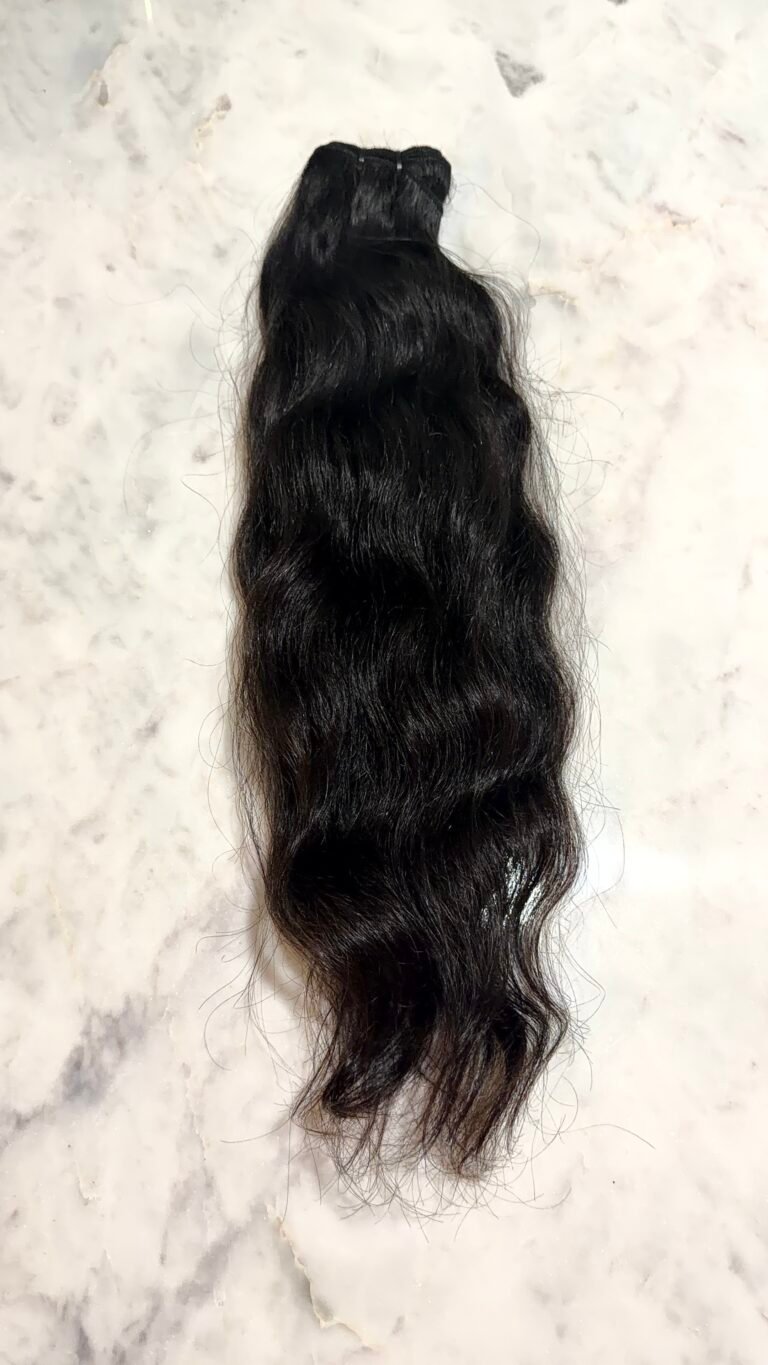
Most weave hair arrives as a weft, meaning the strands are joined along a single sewn edge to form a continuous strip. Machine wefts have a firmer, thicker track and suit sew-ins. Hand-tied wefts are thinner and flatter, which works well with bead-based installs.
Types of Weave Hair by Texture
Texture decides how well the hair blends, so match it to your natural pattern or to the style you plan to wear consistently.
- Straight – Sleek from root to tip. Blends easily with relaxed or naturally straight hair, and shows careless track placement fastest.
- Body wave – A loose, open S-wave with movement but no defined curl. Forgiving to blend and one of the more beginner-friendly textures.
- Deep wave – A tighter, defined wave with plenty of volume. Needs regular moisture and gentle detangling to stop it matting near the roots.
- Curly – Defined curls for a fuller, natural-textured look. Blends well with natural curl patterns, but needs a curl routine rather than brushing.
- Kinky and coily – Made to sit alongside tightly textured hair, including kinky straight versions for blending with blow-outs. Moisture is the whole game here.
No texture is better than another. The right one matches your natural hair or the look you will maintain.
Popular Weave Hairstyles
Straight sew-in – Sleek, polished, and simple to maintain day to day. Works best with straight or relaxed leave-out.
Body wave sew-in – Soft waves with plenty of movement. A common first choice because it hides imperfect blending better than straight hair.
Deep wave weave – Full, dramatic waves that read as very intentional. It needs the most moisture attention of the popular options.
Curly weave hairstyle – Big, textured volume that suits naturally curly leave-out. Best refreshed with water and product rather than brushed.
Side part – A deep side part creates asymmetry and softens the face. It works across most textures and is easy to change day to day.
Middle part – Clean, symmetrical and popular with straight and body wave hair. Blending needs to be neat, since the part sits in full view.
Layered weave – Cutting layers into the installed hair removes bulk and creates shape. Have a stylist cut it; layering extensions freehand rarely ends well.
Bob weave – Chin or shoulder length, sharp or textured. It uses less hair than long styles and is a low-commitment way to try short hair.
Weave Hair vs Other Hair Extension Options
| Factor | Weave | Clip-Ins | Tape-Ins | Wigs |
| Installation | Stylist, in rows | At home, minutes | Stylist, adhesive strips | No attachment needed |
| Wear time | Weeks | Hours per wear | Weeks, then refit | On and off daily |
| Styling | Styled with your hair | Styled before or after wear | Styled with your hair | Styled off the head |
| Maintenance | Regular appointments | Minimal | Refits on a set cycle | Wash and store |
| Best for | Long-term change | Occasional wear | Fine hair, flat finish | Full flexibility |
Weave Hair vs Clip-In Extensions
Clip-ins give complete control and zero commitment, but you handle them every time you wear them. A hair weave is set-and-forget by comparison, at the cost of a salon appointment and a fixed wear period.
Weave Hair vs Tape-In Extensions
Tape-ins lie very flat, which makes them popular for fine hair, but rely on adhesive that oils can loosen. A weave adds more volume per attachment point and uses no adhesive.
Weave Hair vs Wigs
Wigs come off at the end of the day and need no attachment, so they suit anyone who changes looks often. A weave stays put and blends with your leave-out, which many people find looks more integrated at the hairline.
Benefits of Weave Hairstyles
- Adds length in a single appointment
- Builds volume that fine hair cannot create on its own
- Allows a texture change with no chemical treatment
- Opens up styles your current length rules out
- Can offer protective styling when installed correctly and not left in too long
- Lets you experiment without altering your natural hair
That protective point deserves care. Weaves reduce daily manipulation of your own hair, but tight installs, neglected scalp care, and overlong wear undo that quickly. The benefit depends on the installation, not the format.
How to Choose the Right Weave Hair
Texture – Match your natural pattern where possible, especially for the leave-out. Fighting a mismatch every morning gets old quickly.
Length – Longer hair needs more bundles for the same fullness. Factor in your routine too; waist-length hair is a real time commitment.
Density – Decide between a natural, moderate look and a full, dramatic one before ordering, since it changes how much hair you need.
Human vs synthetic – Human for heat styling, longevity, and reuse. Synthetic for lower cost and low-effort style retention. Both are valid.
Installation method – A sew-in, a quick weave, and a bead-based install do not all suit the same hair, so decide the method before you buy.
Desired style – Working backward from the finished look is the easiest way to get it right. Our guide on how to choose high-quality hair extensions covers construction, density, and what to question before buying.
How to Care for Weave Hair
Care depends on the hair type and installation, so follow your stylist’s instructions and any product guidance. These principles apply broadly:
Washing – Focus shampoo on the scalp and tracks, letting the suds run through the lengths rather than scrubbing. Rinse until the water runs clear, since buildup around the tracks causes itching.
Conditioning – Condition the mid-lengths and ends, keeping heavy product away from the attachment points.
Detangling – Work from the ends upward in sections, holding the hair above where you are combing so you are not pulling at the tracks.
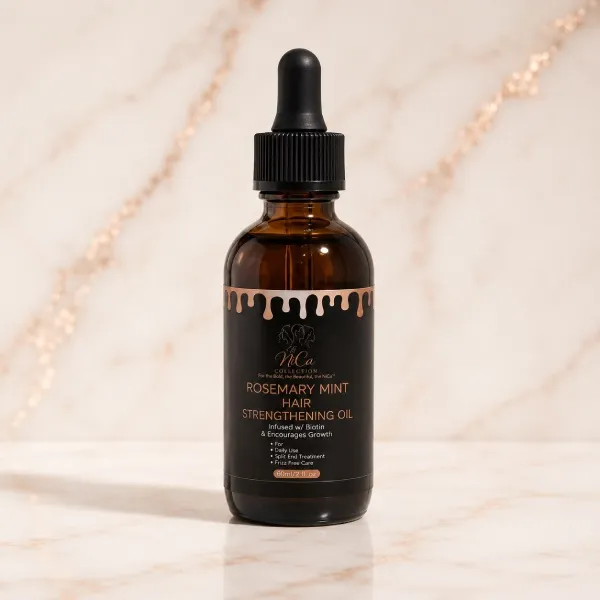
Moisturising – Textured hair needs a light leave-in or oil regularly. Dryness causes most matting.
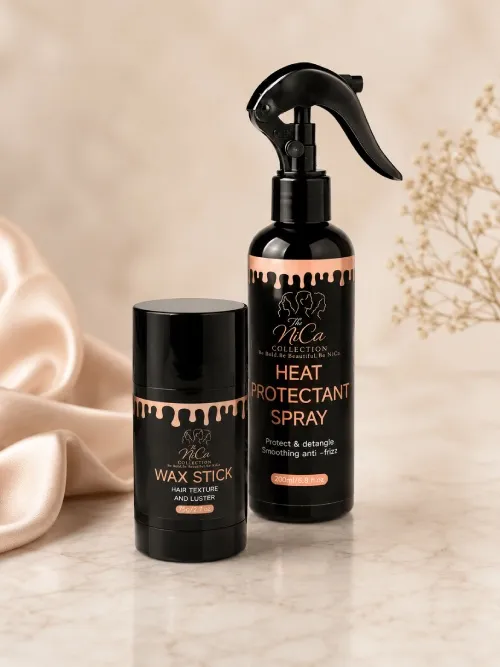
Heat styling – Use protectant on human hair and keep temperatures moderate. Check whether synthetic fibre tolerates heat at all before going near it.
Sleeping – Wrap the hair or use a satin or silk bonnet or pillowcase, and never sleep on wet tracks.
Tangling and shedding – Detangle before and after washing, keep the hair moisturised, and book maintenance before rows grow out and loosen.


How Many Bundles Do You Need for a Weave?
Bundle requirements depend on hair length, how full you want the result, head size, your own density, the installation type, and whether you are adding a closure or frontal. Longer lengths generally need more, and fuller looks need more again.
For a proper breakdown by length and install type, read our guide on how many bundles do you need for a full head before ordering.
How Long Does Weave Hair Last?
There is no single lifespan, and any fixed number quoted online is one person’s experience rather than a rule. What determines it: hair quality, the installation method and how well it was done, your maintenance routine, wash and styling frequency, heat exposure, and whether removal is careful enough for the hair to be reused.
Two people can buy identical bundles and get very different results from habits alone. Wear time is also limited by your natural hair, since rows need attention as it grows regardless of how good the weave still looks.
Frequently Asked Questions About Weave Hair
What is a weave?
Added hair attached to your natural hair to change its length, volume, texture, or style.
What is weave hair?
Human or synthetic hair supplied in bundles or wefts and secured to your own hair, usually in rows.
What is a weave hair extension?
The same thing under another name: added hair joined to your natural hair rather than grown from your scalp.
What does weave hair mean?
The word refers to how the hair is attached, traditionally stitched onto braided sections, not to its quality or origin.
What is a weave hairstyle?
Any finished look created with added hair, shaped by the texture, the row placement and the cut.
What are the different types of weave hair?
By construction: human, synthetic, virgin, and weft hair. By texture: straight, body wave, deep wave, curly, and kinky or coily.
What type of weave hair looks the most natural?
Whichever most closely matches your own. Texture match and quality matter more than the category name.
What is the difference between human and synthetic weave hair?
Human hair takes heat and colour and generally lasts longer. Synthetic hair costs less and holds its set style but has real heat limits.
How long does weave hair last?
It depends on quality, installation, maintenance, and heat exposure, so there is no reliable universal figure.
How do you take care of weave hair?
Wash gently at the scalp and tracks, condition the lengths, detangle from the ends upward, keep it moisturised, protect it at night and keep up with maintenance appointments.
Choosing the Right Weave for Your Style
A hair weave is added hair attached to your own to create length, volume or a new texture. Human, synthetic, virgin, and weft options carry different trade-offs in cost, heat tolerance, and lifespan; texture decides how well the hair blends, and the popular weave hairstyles all start with picking the right hair for the job.
Work backward from the look you want: the texture that suits your natural hair, a length you will realistically maintain, the density that matches the finish you are after, and the construction that fits your installation method. Then commit to the care routine, because that is what separates a weave that still looks good in week six from one that does not.
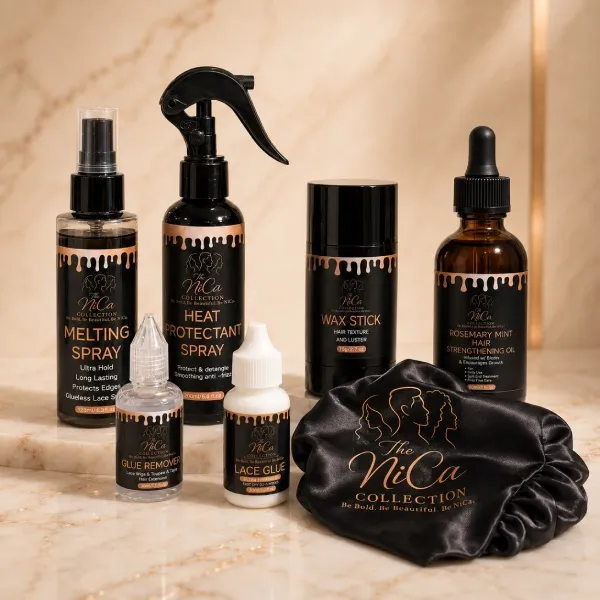
When you are ready to compare options, The NiCa Collection is a marketplace connecting shoppers with vetted hair vendors, with products organised by type, length, colour and texture. It is a practical place to explore hair extensions and wigs and find hair that matches the style you have in mind.



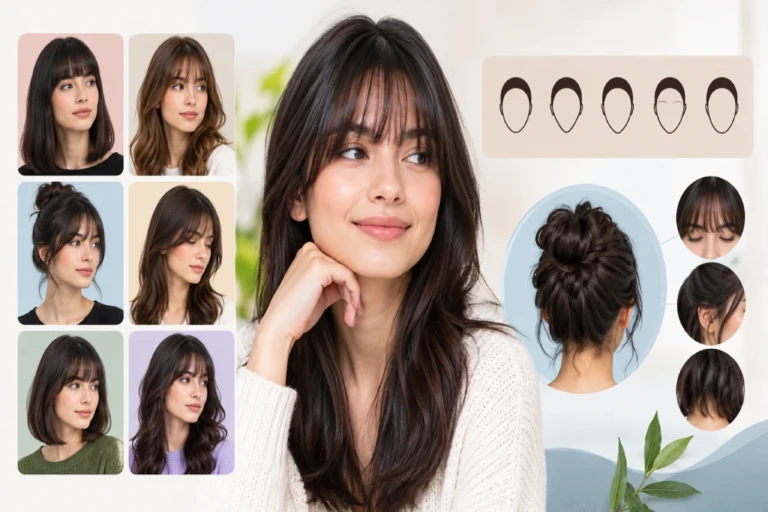
Bangs Hair: Types, Hairstyles and Face Shape Guide
Bangs hair is a section of hair at the front of the head that is cut shorter than the rest, so it falls over the forehead. In the UK and
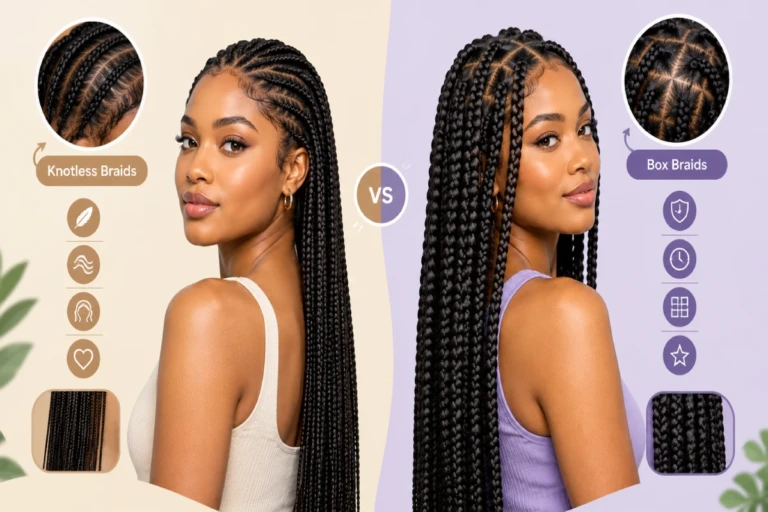
Knotless vs Box Braids: Difference, Lasting Time, Comfort and Style
The main difference between knotless vs box braids comes down to how each style starts at the root. Box braids start with a small knot that secures the extension hair
Difference Between 3C and 4A Hair: Types, Texture & Styles
If you’ve ever looked at a curl chart and felt like your hair belongs in two boxes at once, you’re in good company. 3C and 4A sit right next to