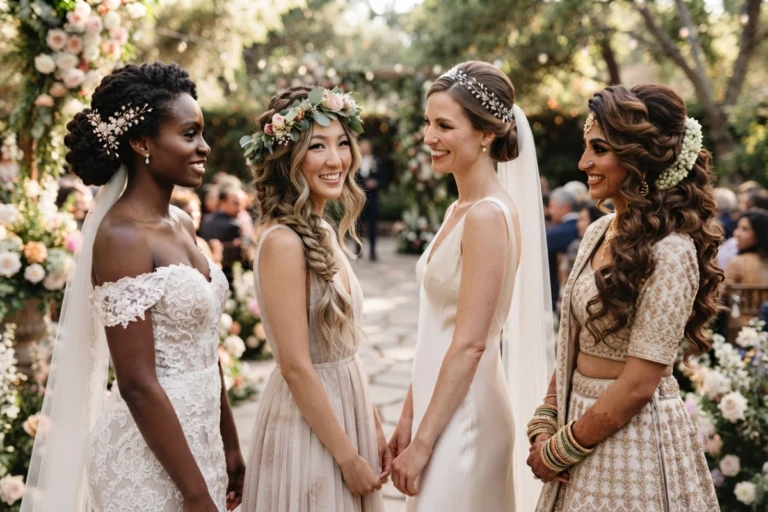
The right bridal hairstyle is not the one saved most often on Pinterest. It is the one that works with your dress, your actual hair, your venue, and the number of hours you will be wearing it.
Most bridal hair regret comes from choosing the picture first and adjusting everything else around it. This guide works the other way, starting with the decisions that narrow your options, then moving through the main types of bridal hair styles, extensions, installation, and wedding-day practicalities.
How to Choose a Bridal Hair Style
| Factor | What to consider | Suitable styles |
| Dress neckline | How much of the shoulders and back is visible | Updos for high necks, soft down styles for strapless |
| Hair length and texture | What your hair holds naturally, not what it can be forced into | Braids and waves for texture, sleek styles for straight hair |
| Venue and weather | Humidity, wind, heat, indoor or open air | Secured updos outdoors, open hair for controlled indoor settings |
| Veil and accessories | Where the veil sits and how it is removed | Low buns and half-up styles for easy veil placement |
| Comfort and duration | Twelve hours, photographs, dancing | Anything you can wear without adjusting it |
Consider Your Wedding Dress and Neckline
A high or embellished neckline competes with hair worn down, so updos and clean ponytails let the detail show. Strapless, sweetheart, and deep-V necklines leave space that soft waves or half-up styles fill beautifully. Backless gowns usually call for hair swept up and off the shoulders.
Consider Your Hair Length and Texture
Short hair suits polished, accessory-led looks rather than volume-heavy updos, while medium and long hair open up most types of bridal hair styles. Straight hair holds sleek shapes but drops curls quickly, wavy hair sets easily, and curly or coily hair looks best in styles that work with the pattern rather than flattening it.
Think About Your Wedding Setting
Indoor and formal venues allow delicate, open styles. Beach and garden weddings involve wind and humidity, so secured updos, braids, and low buns hold up far better. Destination weddings add travel and heat, which makes a low-maintenance style worth more than an elaborate one.
Coordinate With Your Veil and Accessories
Decide where the veil sits before finalising the hairstyle, since a veil under a low bun behaves very differently from one anchored at the crown. If you plan to remove it after the ceremony, the style underneath must still look finished. Statement earrings and hair pieces compete, so let one lead.
Types of Bridal Hair Styles for Weddings
Bridal Updos and Elegant Buns
Sleek buns, chignons, textured updos, and relaxed knots all keep hair off the face and neck for the full day. They photograph cleanly from every angle and hold the best in heat and humidity.
Bridal Ponytails
A ponytail reads far more formal than it sounds. High ponytails suit modern gowns and low ones suit softer gowns, and wrapping the elastic in a section of hair is what separates a bridal ponytail from an everyday one.
Half-Up, Half-Down Bridal Styles
The middle ground for brides who want their hair visible but secured. The top section keeps hair off the face and holds a veil well, while the lengths stay loose for photographs.
Bridal Braids
Braided crowns, side braids, fishtails, and braid-accented updos add texture without accessories. Braids also hold shape for hours, which makes them practical for outdoor weddings. For inspiration on braided looks more broadly, knotless braid hairstyles show how varied braided styling can be.
Loose Waves and Curls
Soft waves and Hollywood-inspired curls remain the most requested bridal hair styles. They need preparation to last, since fresh curls drop within hours. Set them the day before, or style on day-old hair with a strong setting spray.
Sleek Straight Bridal Hair
Understated and modern, and surprisingly demanding, because straight hair shows every flyaway. A deep side parting, a fine hair piece, or added length through extensions gives it enough presence for a wedding.
Wedding Hairstyles for Brides by Bridal Look
Classic and Elegant Bridal Hair
Polished low buns, chignons and structured updos with minimal accessories. This is the look that dates least in photographs, which is why so many brides return to it.
Romantic and Soft Bridal Hair
Loose waves, half-up styles and gently pinned curls with delicate pins or small flowers. Nothing is pulled tight, and the shape looks slightly undone on purpose.
Modern and Minimal Bridal Hair
Sleek ponytails, clean centre partings and smooth buns with almost no ornamentation. The finish carries the whole look, so this style is less forgiving of frizz.
Boho and Relaxed Bridal Hair
Loose braids, textured waves, twisted half-up styles and floral detail. It suits garden and outdoor weddings, where a little movement in the hair works with the setting.
Bridal Hair Extensions: When and Why to Consider Them
Extensions are a styling tool, not a requirement. Plenty of bridal looks need nothing added. They earn their place when the style you want asks for more hair than you currently have.
What Can Bridal Hair Extensions Add to a Hairstyle?
Four things: length, volume through the mid-lengths, density for fuller updos and braids, and the flexibility to try styles your own hair cannot hold. Fine hair benefits most.
Bridal Clip-In Hair Extensions
Bridal clip in hair extensions attach to small sections of your own hair using discreet clips, with no glue, heat, or salon appointment. They go in on the day and come out that night, which makes them the lowest-commitment option. The trade-off is that they need correct placement to stay hidden.
Hair Extension Hairstyles for Wedding Looks
Extensions work into most bridal styles. Ponytails gain length and thickness at the base, buns and chignons gain the bulk needed for a fuller shape, braids gain enough hair to stay thick to the ends, and waves gain the weight that helps curls hold.
Choosing the Right Hair Extensions for Your Bridal Style
Colour match comes first, in daylight and against your mid-lengths rather than your roots. Then texture, since a smooth set against wavy hair shows at the joins. The best bridal hair extensions for you are the ones your own hair can carry comfortably for twelve hours.
Bridal Hair Installation: What to Know Before the Wedding
Schedule a Bridal Hair Trial
Book the trial two to three months out, and test the complete look: hairstyle, extensions, veil, accessories, and the earrings you plan to wear. Problems almost always appear at the joins between these elements, not within the hairstyle itself.
Prepare Your Hair Before Installation
Wash the day before rather than the morning of, since freshly washed hair is slippery and holds pins poorly. Dry it fully, detangle thoroughly, and skip heavy conditioners and oils on the lengths. Follow whatever your stylist asks for, since their instructions are built around their method.
Check the Fit and Comfort
Extensions and pins should feel secure without pulling. Move your head, look down, smile widely, and sit through a few minutes of conversation during the trial. Anything that aches in ten minutes will be unbearable in ten hours.
How to Style Wedding Hairstyles Step by Step
Bridal styles vary too much for one universal method, but the sequence below applies to nearly all of them.
Step 1: Prepare and Section the Hair
Start with dry, detangled, day-old hair. Apply heat protectant before any hot tool, then section the hair according to the final shape so each part can be worked on cleanly.
Step 2: Add Texture or Volume
Curl, wave, or tease as the style requires. Even sleek updos need a little texture to grip, and this is where volume is built rather than added later.
Step 3: Create the Main Shape
Build the bun, ponytail, braid, or half-up section. Shape first and refine after, since chasing perfection too early usually means undoing the work.
Step 4: Add Extensions if Required
Placement depends on the style. Clip-ins for ponytails and buns go in before the shape is built, while pieces for waves and half-up styles sit lower down so they stay covered by your own hair.
Step 5: Secure and Add Accessories
Pin thoroughly, then place the veil and any flowers or pins. Fix the veil so it can be removed later without dismantling the style around it.
Step 6: Finish and Check the Style
Smooth flyaways, then check the shape from the back and both sides in a mirror and on camera. Hair that looks balanced face-on can sit unevenly from behind, which is where most photographs are taken.
Bridal Hair Styles by Hair Length
Short Hair
Pixies and bobs work best with sharp finishing and one strong accessory, such as a pin, comb, or small headpiece. Soft waves add movement, and clip-in pieces can give enough length for a small twisted or half-up shape.
Medium-Length Hair
The most flexible length. Half-up styles, low buns, ponytails, waves, and braids all work, though full updos may need a little added hair to look substantial.
Long Hair
Everything is available, from elaborate updos to waves worn down. The considerations are weight, the time a complex style takes to install, and how the length behaves once the veil is removed.
Wedding Day Hair Tips for a More Reliable Finish
Follow Your Trial Hairstyle Plan
Resist changing the style on the morning. Your stylist planned the timing and products around what you agreed, and last-minute changes are where wedding day hair usually goes wrong.
Pack a Small Hair Emergency Kit
- Bobby pins matched to your hair colour
- Two spare elastics
- A small comb and a travel hairspray
- A spare piece of any accessory you are wearing
- Clear nail varnish or a hair grip for a loose clip
Consider Weather and Venue Conditions
Humidity loosens curls and lifts frizz, wind undoes open hair, and heat makes pins slip. If any of these apply, choose a secured style and keep a light setting spray with you.
Give Yourself Enough Getting-Ready Time
Bridal hair takes longer than a normal appointment, and extensions and veil placement add more. Build in a buffer so adjustments happen calmly rather than in the last ten minutes.
Common Bridal Hair Mistakes to Avoid
- Choosing the style before the dress – The neckline should influence the hair, not the other way around.
- Skipping the trial – It is the only way to see the hairstyle, veil, and accessories working together.
- Poor colour matching – Extensions matched to root colour rather than mid-lengths are the most visible mistake.
- Adding too much hair – Excess weight loosens pins and creates a shape that does not suit the face.
- Ignoring discomfort – Tightness at the trial becomes a headache by the reception.
- Washing your hair that morning – Freshly washed hair will not hold.
Frequently Asked Questions About Bridal Hair Styles
What are the most popular bridal hair styles?
Updos and chignons, half-up styles, soft waves, sleek ponytails, and braided looks. None of them ranks above the others.
How do I choose wedding hairstyles for brides?
Start with your dress neckline, then factor in hair length, venue, veil placement, and how comfortable you need to be.
What are the different types of bridal hair styles?
Updos, ponytails, half-up styles, braids, loose waves, and sleek straight hair. Most bridal looks are variations of these.
Are bridal hair extensions suitable for every wedding hairstyle?
Not always. Suitability depends on the style chosen, your hair’s condition and thickness, and how the extensions are installed.
What are bridal clip-in hair extensions used for?
Temporary length, volume, or thickness on the day itself, with no adhesive, heat, or salon appointment needed.
How far in advance should I have a bridal hair trial?
Two to three months before, leaving time for a second trial and for extensions to be ordered and colour matched.
How can I make wedding day hair last longer?
Style on day-old hair, pin securely, set lightly with hairspray, plan around the weather, and avoid touching it.
How do you style wedding hairstyles with extensions?
Clip them in before the main shape is built, then blend using waves or texture so the joins disappear.
What should I look for in the best bridal hair extensions?
Colour and texture match first, then weight, length and whether they suit the hairstyle you have already chosen.
What should I know about bridal hair installation?
Placement, blending, security and comfort. A well-installed set stays invisible and painless through a full day.
Choosing Your Wedding Day Hair With Confidence
The right hairstyle works with your natural hair, your dress, your accessories, your venue, and your comfort. Every style here is achievable, but not every style is right for every bride, and the difference usually comes down to those five things.
Extensions can give you the length or volume a particular look calls for, and they are genuinely useful for fine hair and fuller updos. They are not necessary for every bridal look, and plenty of the loveliest ones use nothing at all.
Whatever you choose, test the complete look at a trial, especially when extensions or accessories are involved. If extra length or volume is part of your plan, explore hair extensions that match your own texture and colour, and leave enough time before the wedding to get the match right.
Share this Article
Facebook
LinkedIn
WhatsApp
Email
Print
Latest Posts


Find the perfect hair for your next look?
Explore a curated selection of premium extensions and wigs from trusted vendors on NiCa Collection.
Read Related Blog
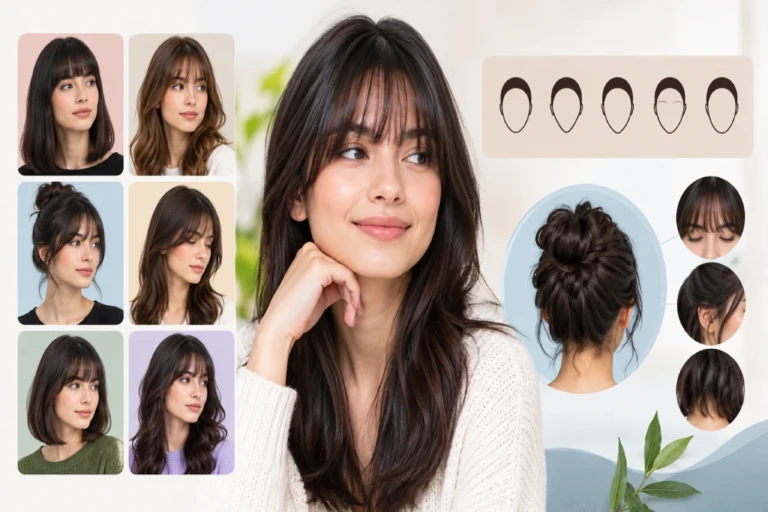
Bangs Hair: Types, Hairstyles and Face Shape Guide
October 16, 2026
Bangs hair is a section of hair at the front of the head that is cut shorter than the rest, so it falls over the forehead. In the UK and
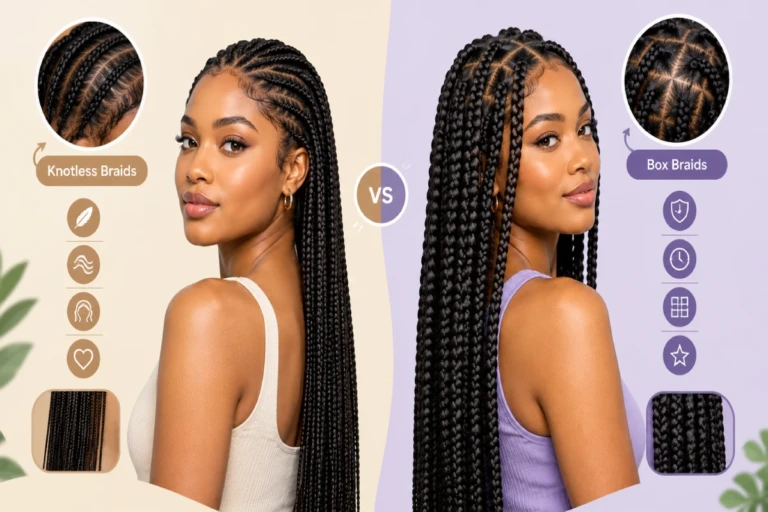
Knotless vs Box Braids: Difference, Lasting Time, Comfort and Style
October 13, 2026
The main difference between knotless vs box braids comes down to how each style starts at the root. Box braids start with a small knot that secures the extension hair
Difference Between 3C and 4A Hair: Types, Texture & Styles
October 8, 2026
If you’ve ever looked at a curl chart and felt like your hair belongs in two boxes at once, you’re in good company. 3C and 4A sit right next to