Here is something a lot of women with fine or thinning hair have been told at some point: “Extensions might not work for you.” And honestly? That is one of the most discouraging and most inaccurate things you can hear when you are already self-conscious about your hair.
The truth is that hair extensions for thin hair absolutely work. Millions of people with fine, limp, or thinning hair wear extensions every single day without damage, without visible attachment points, and without anyone knowing they are there. The key is understanding which types of extensions are safe for fine hair, which ones to stay far away from, and how to care for the combination once you have it.
Whether you are brand new to extensions or you have tried them before and had a bad experience, by the end of this, you will know exactly what to look for and what to avoid.
Can You Wear Hair Extensions on Thin Hair?
Yes, but the attachment method matters enormously. Thin hair has less structural support than thick hair, so some extension types that work fine on thicker strands can cause breakage, traction alopecia, or visible damage on fine hair.
The goal with extensions for thin hair is not just adding length or volume. It is doing so without putting your existing hair under stress it cannot handle. That means prioritizing:
- Lightweight hair in smaller quantities
- Gentle or non-permanent attachment methods
- Even distribution of weight across the scalp
- Regular breaks between installs
When these factors are in place, extensions on thin hair not only look natural; they can actually protect your natural strands by reducing daily manipulation and giving your hair a structural break.
Best Types of Hair Extensions for Thinning Hair
Not all extension methods are created equal, especially for fine or thinning hair. Here is a breakdown of the safest and most effective options, from most recommended to most cautious.
Halo Hair Extensions
For beginners with thin hair, halo extensions are often one of the safest choices.
A hidden wire rests around the crown while your natural hair covers it.
No:
- Glue
- Clips
- Bonds
- Beads
Because nothing attaches directly to individual strands, there is almost no tension involved.
Many women trying extensions for the first time love halo styles because they feel less intimidating.
Clip-In Hair Extensions for Thin Hair
Clip-ins are the most popular extension option worldwide and for good reason. They are temporary, easy to apply at home, adjustable, and completely removable at the end of the day. For thin hair specifically, their on-off nature means your natural strands are never under prolonged stress.
The key with clip-ins on fine hair is choosing the right weight and distributing clips evenly across the head. Too many clips concentrated in one spot create pressure that can weaken the hair at that point over time. A lightweight clip-in set typically 100 to 120 grams for thin hair versus 160 to 200 grams for thicker hair, reduces this risk significantly.
Never sleep, swim, or exercise vigorously in clip-in extensions. The added weight and friction during these activities can cause unnecessary stress on fine strands.
Tape-In Hair Extensions
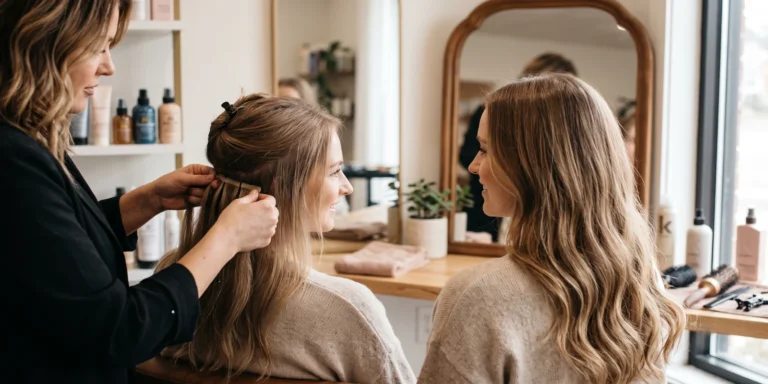
Tape-in extensions use a thin adhesive strip to sandwich a small section of your natural hair between two wefts. When applied correctly by an experienced stylist, tape-ins are one of the flattest-lying extension methods available, which means they blend seamlessly even in thin hair.
They are semi-permanent, lasting six to eight weeks before needing a move-up appointment, and the weight is distributed in thin, wide panels rather than in concentrated points. This even distribution is gentler on fine hair than methods that attach in single-strand clusters.
Micro-Link and Nano-Link Extensions
These are strand-by-strand extension methods where individual wefts are attached using tiny beads or rings clamped onto small sections of natural hair. No heat and no glue are involved, which makes them less damaging than some older bonded methods.
For thin hair, nano-links are preferable to micro-links because the attachment beads are significantly smaller and lighter. However, both methods require a skilled stylist; incorrect sizing or placement puts tension on individual strands that fine hair may struggle to support long-term.
If you are interested in strand-by-strand extensions on thin hair, always consult with a specialist first rather than going to a general salon.
Extension Types Thin Hair Should Avoid
- Fusion/hot bond extensions: These use a keratin bond melted with heat to attach strands to your natural hair. While they look natural, the bonding and removal process can be harsh on fine, fragile strands.
- Sew-in weaves (traditional): These require braiding your natural hair into a base and sewing weft hair onto it. The tension from braiding can be significant for thin hair, and the weight of a full sew-in can accelerate thinning if the hair is already fragile.
- Heavy, thick wefts on fine hair: Any extension type can be damaging if the hair used is too heavy for your natural strands to support. Volume that looks stunning on thick hair can pull and thin fine strands over time.
Wigs Can Also Be a Great Alternative
For people with significant thinning, whether from postpartum shedding, hormonal changes, alopecia, or other causes, traditional hair extensions may not be the most practical option. When the natural hair is too sparse to conceal attachment points or support even light extension weight, a high-quality wig is often the better solution.
Modern wigs have come a long way from the stiff, obvious units of decades past. HD lace wigs, full lace wigs, and lace front wigs are now so natural-looking that they are completely undetectable when properly installed, even up close.
The advantages of thinning hair are real:
- Your natural hair is fully protected underneath, with no attachment stress whatsoever
- You can choose any length, texture, and density without worrying about blending
- High-quality human hair wigs can be heat styled, colored, and treated like your own hair
- Rotating between wigs gives your natural hair extended rest periods that support regrowth
How to Choose the Right Hair Extensions for Thinning Hair
When you walk into a salon or browse an online shop, the sheer number of options can be overwhelming. Here is a straightforward decision framework for people with thin or thinning hair.
Match Density to Your Natural Hair
This is the most overlooked factor for beginners. Hair extensions come in different densities, ranging from 130% (lighter) to 180% and beyond (very full). For thin hair, starting with a lower density and layering up is always smarter than choosing the thickest option and trying to blend it downward.
A good stylist will look at your natural hair density first and select extension density accordingly, rather than choosing based on what looks best in photos.
Choose Human Hair Over Synthetic
For thin hair, especially, human hair extensions are strongly preferred over synthetic ones. Here is why:
- Human hair weighs less per strand than synthetic, reducing tension on fine natural hair
- Human hair blends more naturally with your own strands in terms of movement and texture
- You can style human hair with heat, which helps blend the extension with your natural hair
- Human hair is gentler on the scalp in the long term
To understand exactly what separates quality human hair from lower-grade options and how to avoid being misled by labels.
Prioritize Texture Matching Over Length
People naturally fixate on length when shopping for extensions, but for thin hair, texture matching is more important. If your natural hair is straight and fine, a silky straight extension will blend far more naturally than a body wave, even if the body wave looks beautiful on its own. Mismatched textures draw the eye to the transition point, the last thing you want when your hair is already fine.
Consult a Stylist Who Specializes in Fine Hair
This cannot be emphasized enough. A stylist who regularly works with thick hair and applies extensions accordingly can cause real damage when working with thin or thinning hair. Seek out someone who specifically mentions fine hair or thinning hair clients in their portfolio or consultations.
How to Care for Hair Extensions on Thin Hair
Getting extensions installed or purchased is only half the journey. How you care for them and for your natural hair underneath determines whether this is a positive, confidence-building experience or a damaging one.
Washing
Wash extension hair gently with sulfate-free shampoo. For clip-ins, remove them before washing your natural hair. For semi-permanent methods, wash in a downward motion to avoid tangling at the attachment points. Never sleep with wet extensions. The combination of moisture and movement overnight can cause severe tangling and friction damage.
Brushing
Always start from the ends and work upward. For thin natural hair wearing extensions, never brush at the root level. Work through the lengths first, then gently approach the attachment area. Use a wide-tooth comb or a loop brush specifically designed for extension hair.
Heat Styling
Apply a heat protectant before using any hot tools, both on your natural hair and on the extension hair. Keep temperatures moderate (below 380°F) to preserve the integrity of both. Human hair extensions can handle heat, but repeated high-heat styling will shorten their lifespan.
Give Your Hair Breaks
Even the gentlest extension method should be paired with regular breaks. For clip-ins, remove them every night. For semi-permanent methods, follow your stylist’s guidance on how long to keep the install before taking a break. During these breaks, focus on nourishing your natural hair with deep conditioning treatments, scalp massages, and moisture-rich products.
Watch for Warning Signs
Some tension and adjustment discomfort is normal in the first day or two after a new install. But if you experience persistent pain at the attachment points, visible hair loss at the margins of the install, or ongoing scalp tenderness, remove the extensions and consult your stylist. Catching problems early protects your natural hair from compounding damage.

Hair Confidence Looks Different for Everyone
Hair extensions for thinning hair add volume and length, but they are not a substitute for addressing the underlying cause of thinning if one exists. If your thinning is significant or progressing, speaking to a dermatologist or trichologist alongside your extension journey is genuinely worthwhile.
Extensions work best when approached thoughtfully, not as a quick fix applied without regard for your hair’s current state. The good news is that when you choose the right method, use quality hair, and work with someone who understands fine strands, they can be a long-term, confidence-building part of your routine, not a compromise.
The good news is that the hair extension industry has evolved enormously. Buying from trusted, quality-verified sources rather than taking a chance on unknown sellers makes a significant difference in what you receive. Platforms that vet their vendors and build quality standards into the buying experience are changing how people shop for hair.
FAQ: Hair Extensions for Thin and Thinning Hair
Q: Can hair extensions cause more hair loss if my hair is already thinning?
Incorrect type or improper installation can worsen thinning; the right method applied correctly will not.
Q: What is the least damaging extension type for thin hair?
Halo extensions have zero attachment to natural hair, making them the gentlest option available.
Q: How heavy should extensions be for thin hair?
Aim for 80 to 120 grams for clip-ins; lighter is always safer when starting with fine hair.
Q: Can I wear clip-in extensions every day on thin hair?
Daily use is fine if you remove them nightly and distribute clip placement evenly across the scalp.
Q: How do I match extension color to thin, fine hair?
Choose one shade lighter at the ends for natural dimension; exact root matches can look flat.
Q: Will tape-in extensions damage thin hair?
When properly applied and removed by an experienced stylist, tape-ins are safe for most fine hair.
Q: How often should I take a break from semi-permanent extensions?
Take a one to two week break between every install to allow your natural hair to recover.
Q: Are wigs better than extensions for thinning hair?
For significant thinning, wigs are often the better choice as they apply zero stress to natural hair.
Q: Can I get hair extensions if I have postpartum hair loss?
Yes, but wait until shedding stabilizes; halo or clip-ins are the safest options during this period.
Q: Where can I find quality human hair extensions for thin hair?
Look for verified vendors on trusted platforms The Nica Collection curates premium options from vetted sellers.
Finding What Feels Right for Your Hair
Hair journeys can be personal, especially when thinning or fine hair affects confidence. What works beautifully for one person may not feel right for someone else, and that is completely normal.
Halo and clip-in extensions are the safest starting points for beginners. Tape-ins and nano-links work well when applied by an experienced specialist. Match density and texture to your natural hair, not to what looks best in photos. Human hair always outperforms synthetic for fine hair in terms of weight, blend, and longevity. And if thinning is significant, today’s wig options are stunning and worth serious consideration.
Ready to take the next step? Start by exploring quality-verified options at The Nica Collection, where premium human hair extensions and wigs are curated from vetted vendors committed to quality. And before you buy, arm yourself with knowledge: read their complete guide to choosing high-quality hair extensions so you know exactly what to look for.
Your hair deserves the best, and now you know how to find it.




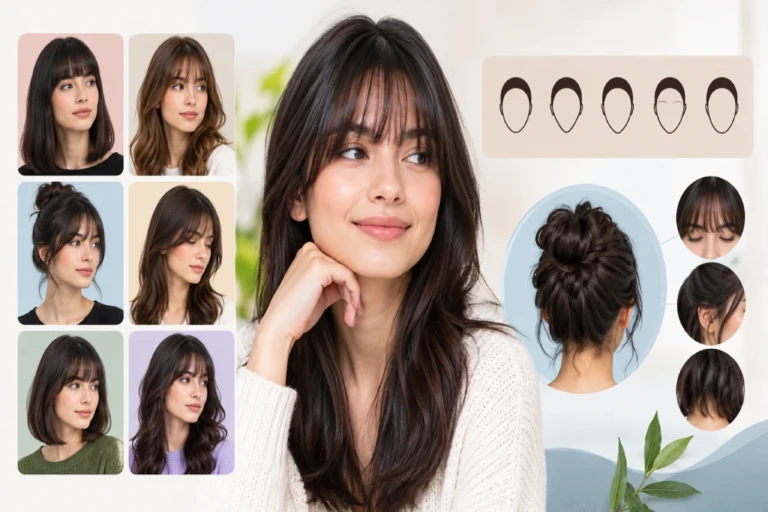
Bangs Hair: Types, Hairstyles and Face Shape Guide
Bangs hair is a section of hair at the front of the head that is cut shorter than the rest, so it falls over the forehead. In the UK and
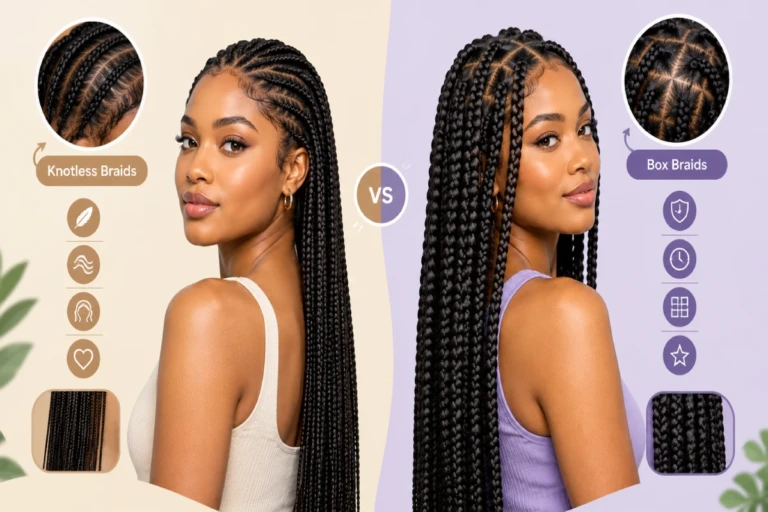
Knotless vs Box Braids: Difference, Lasting Time, Comfort and Style
The main difference between knotless vs box braids comes down to how each style starts at the root. Box braids start with a small knot that secures the extension hair

Difference Between 3C and 4A Hair: Types, Texture & Styles
If you’ve ever looked at a curl chart and felt like your hair belongs in two boxes at once, you’re in good company. 3C and 4A sit right next to