

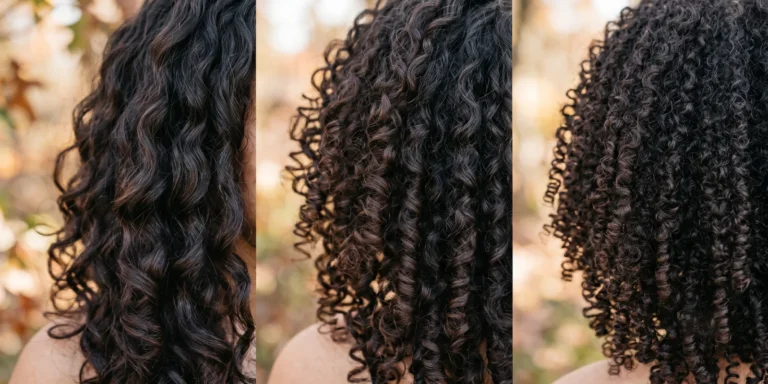
The difference comes down to curl size and tightness. 3A curls are loose and large, roughly the width of a piece of sidewalk chalk. 3B curls are tighter and springier, closer to a marker pen. 3C curls are tighter still, packed densely and closer to a pencil or drinking straw in width.
All three belong to Type 3 hair, the curly band of the common hair typing system. As the pattern tightens from 3A to 3C, curls get smaller, volume builds, shrinkage increases, and the hair generally asks for more moisture.
Treat these as reference points, not boxes. Plenty of people have 3A curls at the crown and 3C at the nape, and typing tells you nothing about density or porosity. This guide covers each pattern, the 3a vs 3b vs 3c hair differences that matter, and how curl type affects care, styling, and extension choice.
What Is Type 3 Hair?
Type 3 hair is curly hair that forms defined loops or spirals you can see without stretching or manipulating it. It sits in the middle of a system that runs from Type 1 (straight) through Type 2 (wavy) and Type 4 (coily).
The distinction from neighbouring types is clear at the edges. Type 2 hair bends in S-shaped waves that lie flat and never close into a loop. Type 3 hair makes actual loops with space inside them. Type 4 hair coils so tightly the loop closes, often zigzagging rather than curving.
The system is shorthand for describing texture, and that is all it is. It says nothing about how many strands you have, how fast your hair absorbs water, or how thick each strand is. Two people with identical 3B patterns can need completely different routines because one has fine, high-porosity hair and the other coarse, dense hair.
What Are 3A, 3B and 3C Curls?
| Curl Type | General Pattern | Curl Size | Common Characteristics |
| 3A | Loose curls | Larger loops | Open, well-defined, hangs with length |
| 3B | Springy curls | Medium loops | Tighter, more volume, bouncier |
| 3C | Tight curls | Small loops | Dense, tightly packed, high shrinkage |
What Is 3A Hair?
3A hair forms large, loose curls with an open spiral. The loops are wide enough to see straight through the middle of a curl.
Because the pattern is loose, 3A curls hang rather than stand, so length shows more readily than with tighter patterns, with roots sitting flat and body building through the mid-lengths.
Definition is usually good with minimal product, though it drops off fast if the hair is brushed dry or handled while drying. Frizz is the common complaint, especially at the crown and hairline, and it usually points to dryness or humidity rather than the curl itself. Shrinkage happens but is the mildest across Type 3.
How to Identify 3A Curls
- Loops are noticeably wider than a marker pen
- You can see through the curl
- The pattern defines without much product
- Hair hangs down rather than out
- Dry length stays fairly close to stretched length
Hair varies. Looser, wave-like sections underneath are normal.
What Is 3B Hair?
3B hair curls in tighter, springier ringlets. The loops are smaller than 3A and hold their shape more firmly, so the hair bounces back when pulled and released.
The tighter pattern creates more volume, so 3B hair reads as fuller even at the same strand count as looser types. Shrinkage is more pronounced, and dry length can look meaningfully shorter than stretched length.
Moisture needs to step up here, since oils travel slowly down a tighter spiral and the ends dry out faster. 3B curls typically respond well to a leave-in plus a cream or gel, and the pattern holds a set, which makes twist-outs and braid-outs reliable.
How to Identify 3B Curls
Compare against 3A on four things at once:
- Tightness. Springy ringlets rather than open loops
- Size. Roughly marker-pen width, clearly smaller than 3A
- Shrinkage. Noticeably shorter dry than stretched
- Density. Curls pack closer, giving more visible fullness
If a curl bounces back when you pull it straight and release, you are likely looking at 3B.
What Is 3C Hair?
3C hair forms tight, small curls packed closely together. The curls are narrow, often near the width of a pencil or straw, and sit densely enough that the hair reads as very full.
This is the tightest end of Type 3, sitting right beside Type 4. The curls still form defined loops rather than zigzags, which is the line between the two, though plenty of people sit on the border.
Shrinkage is the most dramatic in the range, and hair measuring well past the shoulders stretched can sit at chin length dry. Moisture matters more here, since the tight pattern slows oil distribution and the sheer number of curls means more surface area to hydrate. Detangling needs sectioning, and the pattern holds set styles well.
How to Identify 3C Curls
- Curls are small and tightly wound, close to pencil width
- Loops still close into circles rather than zigzags
- Hair stands and expands outward rather than hanging
- Shrinkage is dramatic when compared with stretched length
- Curls are densely packed, with little visible scalp
3A vs 3B vs 3C Hair: Key Differences
| Feature | 3A Hair | 3B Hair | 3C Hair |
| Curl pattern | Loose, open spirals | Springy ringlets | Tight, small curls |
| Curl size | Large loops | Medium loops | Small loops |
| Curl tightness | Loosest in Type 3 | Moderate | Tightest in Type 3 |
| Definition | Defined with light product | Holds shape well | Very defined, dense |
| Volume | Builds through mid-lengths | Fuller throughout | Highest, expands outward |
| Shrinkage | Mildest of the three | Noticeable | Most dramatic |
| Density | Varies by individual | Varies, often reads fuller | Varies, usually reads dense |
| Frizz | Common at crown and hairline | Common when dry | Common, texture can mask it |
| Moisture needs | Moderate, lighter products | Higher, cream plus leave-in | Highest, often layered |
| Styling | Hangs, holds light definition | Sets well, versatile | Holds sets, often stretched |
Those rows cover the shape of it. Here is where the differences actually show up.
3A vs 3B Hair
The jump from 3A to 3B is tightness and spring. 3A curls sit open and hang under their own weight; 3B curls coil enough to resist it, so the hair sits fuller and shorter. In practice, 3B needs more product to hold definition and takes longer to dry, while 3A loses its pattern faster from over-handling.
3B vs 3C Hair
Curl size is the clearest difference, since 3B ringlets are visibly wider than 3C curls, and density follows because smaller curls pack more tightly into the same space. Shrinkage separates them most day to day: 3B looks shorter than it is, 3C can look dramatically shorter. Detangling shifts too, with 3C usually needing sectioning where 3B may not.
3A vs 3C Hair
Side by side, these are the two ends of the same range. 3A hangs, 3C stands. 3A shows most of its length, 3C hides much of it. 3A works with lighter products, 3C typically wants richer creams and more of them. Even the goals differ: 3A styling focuses on keeping definition, 3C styling often on stretching to show length.
How to Tell If You Have 3A, 3B or 3C Hair
Check on clean hair that has air-dried without product-heavy styling or constant touching.
- Look at your natural pattern – Wash, apply little to nothing, and let the hair dry undisturbed, since manipulating it while it dries changes what you see.
- Compare curl size – Hold one curl against a common object: chalk suggests 3A, a marker 3B, a pencil or straw 3C.
- Check shrinkage – Note where a stretched wet strand reaches, then compare once dry. A small difference points looser, a dramatic one tighter.
- Look at several sections – Check crown, sides, nape and front separately rather than judging from one curl.
- Accept more than one pattern – Mixed typing is normal. Most people have a dominant pattern with other sections behaving differently.
If you sit between two types, treat your hair section by section rather than picking one label.
How to Care for 3A, 3B and 3C Hair
The basics apply across Type 3: cleanse the scalp, condition the lengths, detangle damp rather than dry, and protect the hair at night. What follows is a difference in emphasis, not a fixed routine, since porosity, density, strand thickness, and condition all affect what works for you.
3A Hair Care
Definition and buildup are the main concerns. Lighter products usually work better, since heavy creams weigh open curls down and flatten the pattern. Frizz management is mostly about moisture and leaving the hair alone while it dries, not adding more product. Clarify occasionally if curls start looking limp.
3B Hair Care
Moisture becomes more of a priority, usually a leave-in on damp hair followed by a cream or gel. Detangle in the shower with conditioner in, working from the ends up. Definition holds once set, so the goal is stretching a good wash day out rather than restyling daily.
3C Hair Care
Moisture retention and low manipulation are the focus. Layering often beats one heavy product: water or a water-based leave-in, then a cream, then an oil to slow moisture loss. Section into four to six parts to detangle on damp, conditioned hair, and keep tension low, since repeated pulling at the same spots causes avoidable breakage.
Styling Differences Between 3A, 3B and 3C Curls
Curl pattern changes what holds, how long drying takes, and how much product you get through. None of these types is universally easier to style; they reward different techniques.
Styling 3A Curls
Wash-and-go works well because the pattern is already defined: light gel or mousse on soaking wet hair, scrunched and left alone. Half-up styles suit 3A because the hanging length shows, and diffusing on low adds root volume that loose curls sometimes lack.
Styling 3B Curls
Wash-and-go, twist-outs, and braid-outs all suit 3B, and sets are worth the effort since the pattern holds them and gives a stretched, uniform result. Curly updos and pineapples cover day two and three, where refreshing with water and a little leave-in beats rewashing.
Styling 3C Curls
Twist-outs and braid-outs are dependable, giving definition and stretch together. Wash-and-gos work with enough product, though shrinkage will be significant. Protective styles such as braids, twists, and installed extensions reduce daily manipulation, which helps when they go in without excessive tension and come out on time.
Best Hair Extensions for 3A, 3B and 3C Hair
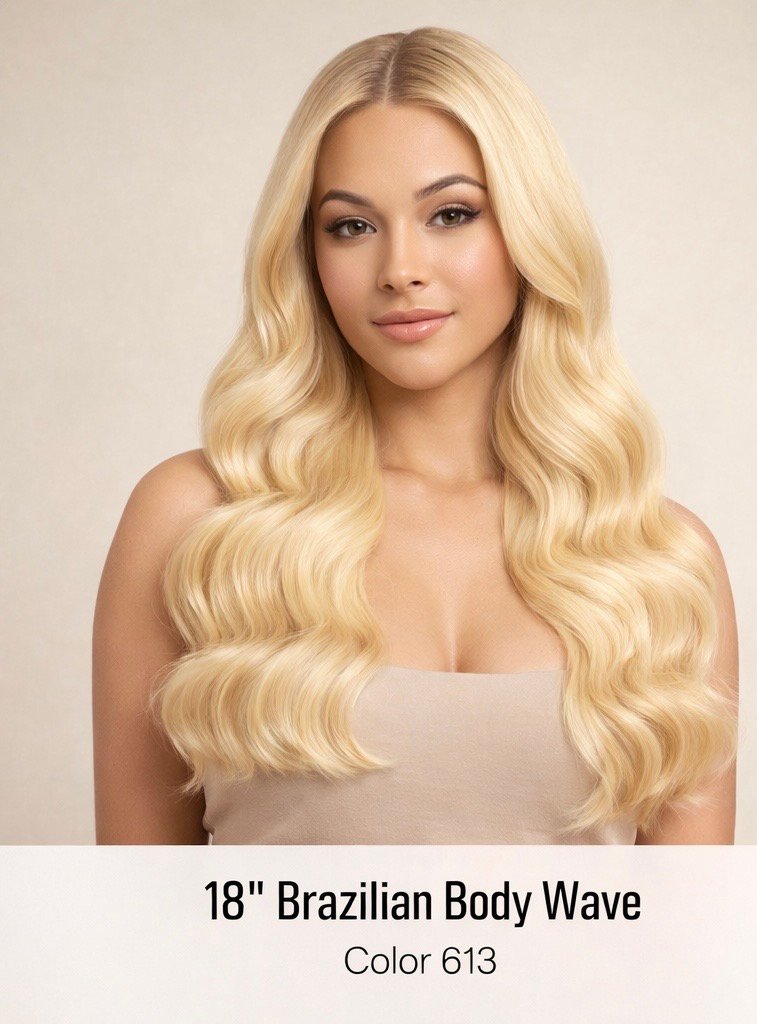
Choosing extensions for Type 3 hair means matching the look you want, not the label on the bundle. Curl-type labels vary between vendors, so check product photos against your own pattern.
Work through curl pattern, texture, density, length, colour, desired volume, and installation method. Buy stretched length, since textured extensions shrink too, and watch density at the leave-out, because that section does the blending. Our guide on how to choose high-quality hair extensions covers construction and quality markers worth checking before ordering.
Extensions for 3A Hair
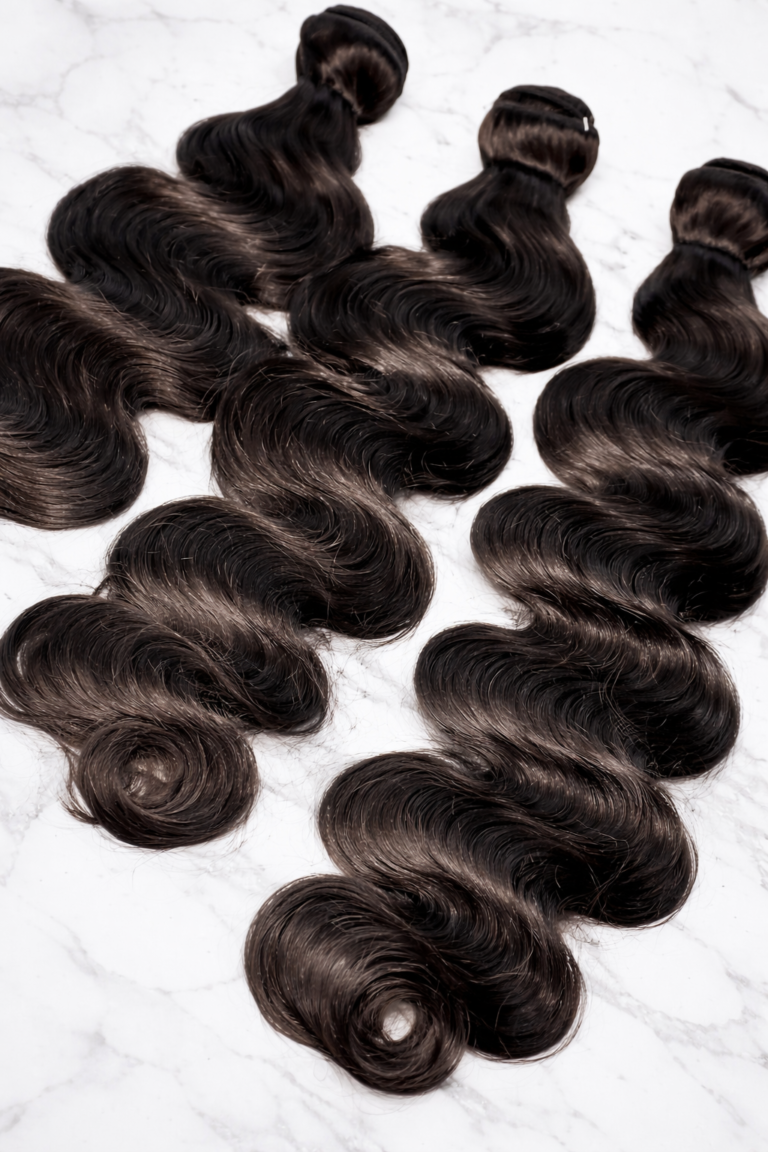
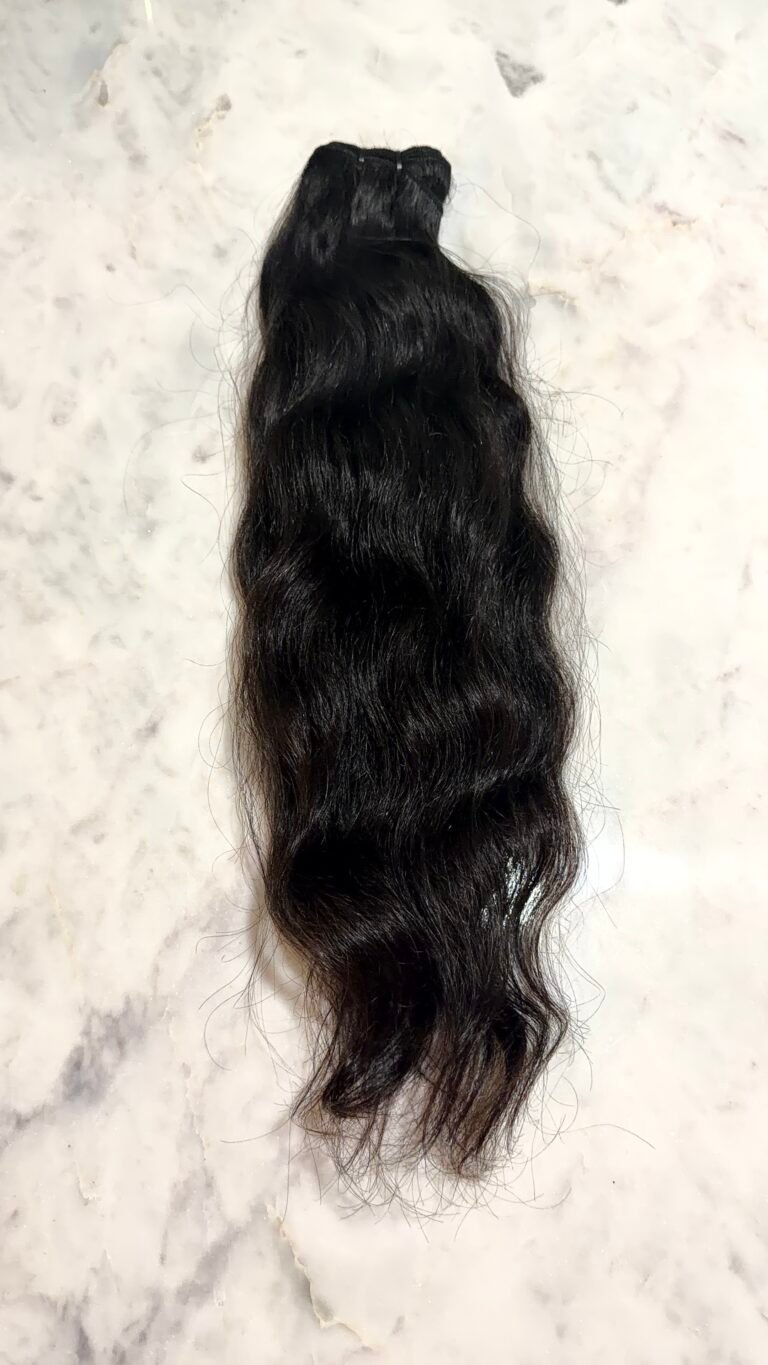
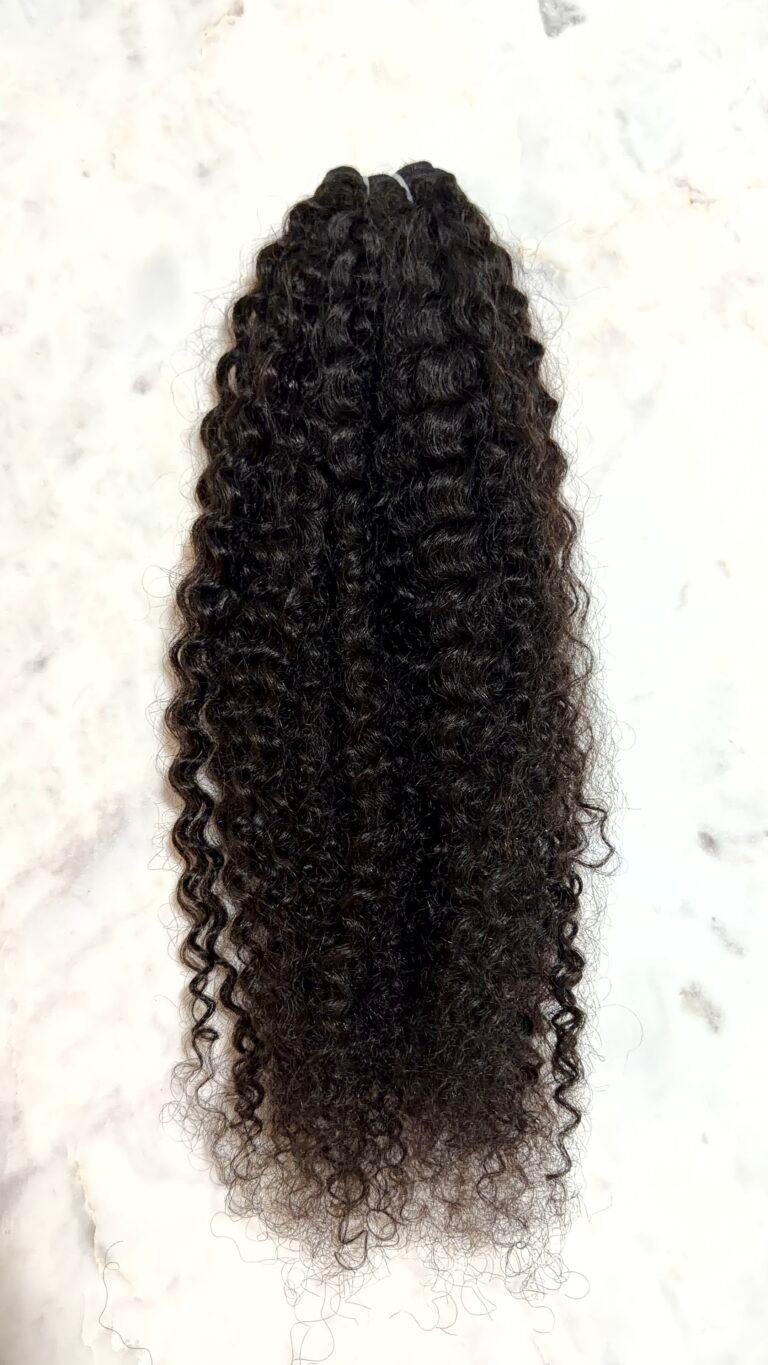
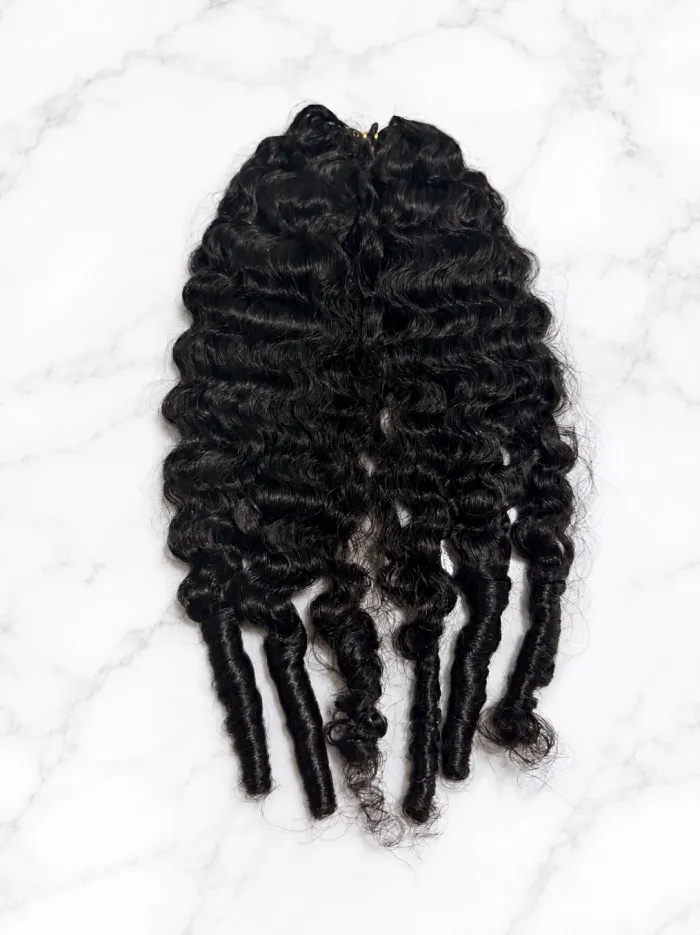
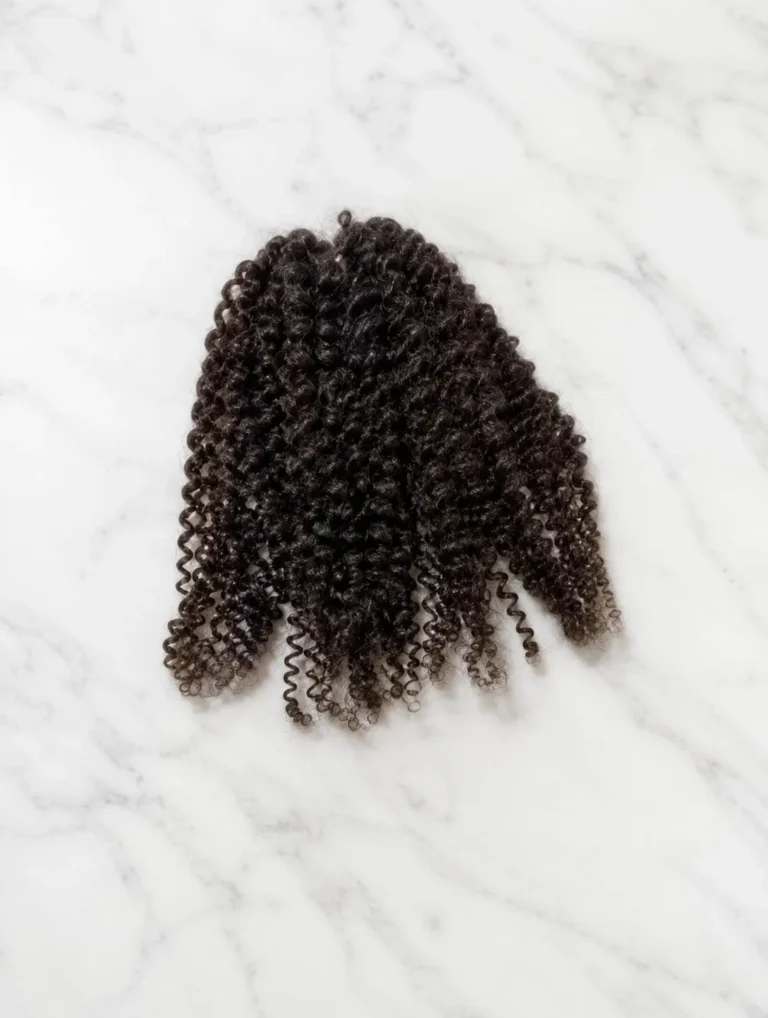
Look for loose curl and body-wave textures with an open pattern, since anything much tighter creates a visible line at the leave-out. 3A hair hangs, so extensions that hold a looser pattern under their own weight blend better than springy ones sitting higher than your curls.
Extensions for 3B Hair
Medium curl patterns and defined curly textures suit 3B. Match the spring as well as the size, since the right loop width without the bounce still reads as different hair. Density matters too, as 3B carries visible fullness; a thin install will not match.
Extensions for 3C Hair
Tighter curly and kinky curly textures suit 3C, and density matters most here, since tightly packed curls need equally full extensions to blend. Consider the install method as carefully as the hair: low-tension approaches protect the hairline, and bead-based installs skip braiding entirely.

3A vs 3B vs 3C Hair: Which One Is Right for You?
None is better than the others. You do not choose your curl type, and no pattern is healthier, easier, or more desirable than another.
Identifying your pattern gives you a shortcut, nothing more. It explains what your hair naturally does, points you toward techniques likely to work rather than ones built for a different texture, hints at how much moisture and detangling to expect, and narrows extension choice to textures that blend with what you already have.
FAQs About 3A, 3B and 3C Hair
What is Type 3 hair?
Curly hair that forms defined loops or spirals without being stretched. It covers the 3A, 3B and 3C patterns and sits between wavy Type 2 and coily Type 4.
What is 3A hair?
The loosest Type 3 pattern, with large, open curls that hang and show length with relatively little shrinkage.
What is 3B hair?
Springy ringlets tighter than 3A, roughly marker-pen width, with more volume and more noticeable shrinkage.
What is 3C hair?
The tightest Type 3 pattern, with small, densely packed curls near pencil width and dramatic shrinkage.
What is the difference between 3A, 3B and 3C hair?
Curl size and tightness. Curls get smaller from 3A to 3C, while volume, density, and shrinkage all increase.
How can I tell if I have 3A, 3B or 3C curls?
Let clean hair air-dry undisturbed, compare one curl’s width against a chalk stick, marker, or pencil, and check how much it shrank against its stretched length.
Can you have more than one curl type?
Yes, and it is very common. Different sections often carry different patterns, which is why one product or technique may not work everywhere.
Does 3C hair shrink more than 3A hair?
Generally yes, and the difference can be substantial. Measure stretched length when buying extensions.
How should you care for Type 3 curly hair?
Cleanse the scalp, condition the lengths, detangle damp rather than dry, moisturise according to how fast your hair dries out, and protect it at night. Adjust for porosity and density, not curl type alone.
What hair extensions work best for 3A, 3B and 3C curls?
Whichever most closely matches your curl width, spring, density, and stretched length. Match the texture rather than trusting a vendor’s category name.
Understanding Your Type 3 Curls
Type 3 hair covers 3A, 3B, and 3C, and the differences come down to curl size, tightness, volume, and shrinkage. Curls tighten, and shrinkage grows as you move along the range, with moisture needs generally rising too.
Hair typing is a helpful shorthand, not a scientific classification. It does not measure density, porosity, strand thickness or condition, and those shape your routine as much as your pattern does. The 3a vs 3b vs 3c hair comparison works best as a starting point for choosing products, techniques and extension textures, and worst as a rigid identity.
When you are ready to look at options, The NiCa Collection connects shoppers with vetted hair vendors and organises products by texture, curl pattern, length and colour, which makes matching your own curls more straightforward. It is a practical place to explore hair extensions and wigs that suit the pattern you actually have.



Bangs Hair: Types, Hairstyles and Face Shape Guide
Bangs hair is a section of hair at the front of the head that is cut shorter than the rest, so it falls over the forehead. In the UK and
Knotless vs Box Braids: Difference, Lasting Time, Comfort and Style
The main difference between knotless vs box braids comes down to how each style starts at the root. Box braids start with a small knot that secures the extension hair

Difference Between 3C and 4A Hair: Types, Texture & Styles
If you’ve ever looked at a curl chart and felt like your hair belongs in two boxes at once, you’re in good company. 3C and 4A sit right next to