
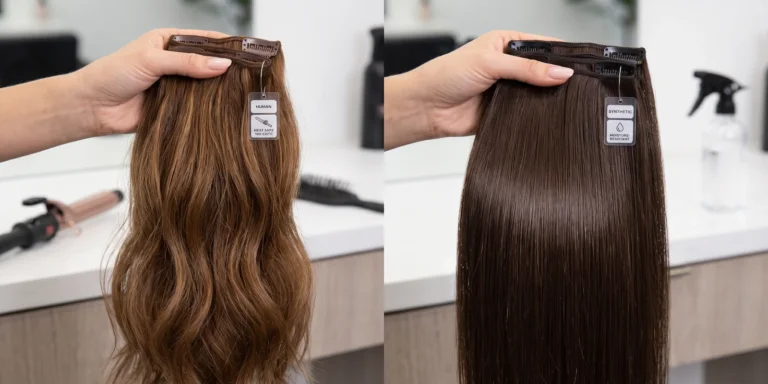
You’ve decided you want extensions. Great, now comes the part that trips up almost everyone: do you go with human hair or synthetic?
Both options are widely available. Both can look good. But they behave very differently, and choosing the wrong one based on price alone (or a quick online search) often leads to regret.
This guide walks you through everything you actually need to know. The real differences between human hair extensions and synthetic hair extensions, what each one is best suited for, the honest pros and cons of each, and how to figure out which makes more sense for your specific situation.
No fluff. Just practical information.
What Are Human Hair Extensions?
Human hair extensions are made from real, natural hair collected from donors, processed, and cut into wefts, clip-ins, tape-ins, or other extension formats.
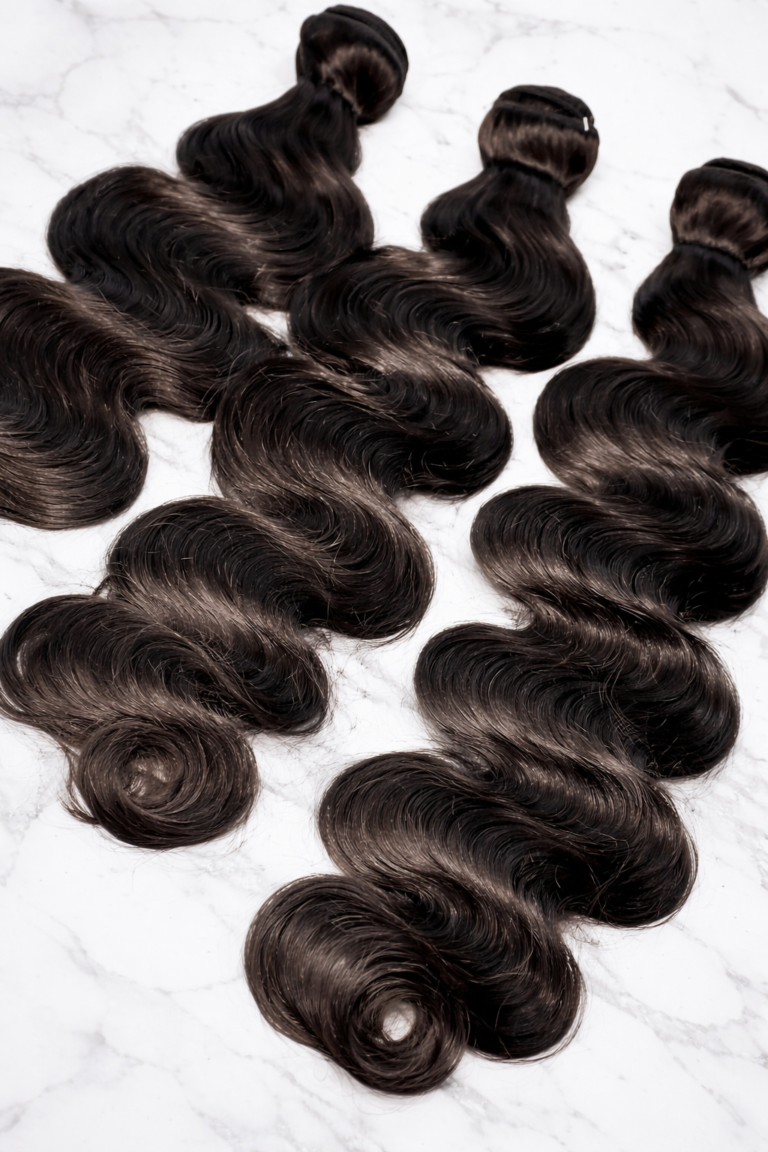
Because the hair is real, it behaves exactly like your own hair. You can wash it, blow-dry it, curl it, straighten it, and color it. It moves naturally, reflects light the way real hair does, and blends almost seamlessly with most hair types.
The two most common types you’ll come across are:
- Remy human hair has the cuticles on every strand aligned in the same direction, which reduces tangling and gives the hair a smoother, more natural look. This is considered the gold standard.
- Non-Remy human hair cuticles are mixed in direction, which means more tangling over time. Usually cheaper, but the quality reflects that.
Human hair extensions are the preferred choice for long-term wear, frequent styling, and anyone who wants the most natural result possible.



What Are Synthetic Hair Extensions?
Synthetic hair extensions are made from man-made fibers, most commonly a type of plastic or acrylic designed to mimic the look and feel of real hair.
They’ve improved a lot over the years. Some high-end synthetic options actually look quite convincing, especially from a distance or in photos. But they have real limitations when it comes to heat, styling, and longevity.
There are two categories worth knowing:
- Standard synthetic hair cannot handle heat tools. Comes pre-styled, and that style is mostly fixed. If you curl it with a flat iron, it melts or frizzes permanently.
- Heat-resistant synthetic hair can tolerate some heat styling, usually up to around 180°C (350°F), but still not as versatile as human hair.
Synthetic extensions tend to cost significantly less upfront, which is why they’re popular for one-time events, costume use, or experimenting with color and length without a big financial commitment.
Human Hair vs Synthetic Hair Extensions: Key Differences
Here’s a side-by-side look at how the two compare across the things that matter most:
Appearance and Feel
Human hair looks and feels like natural hair because it is. It catches the light naturally, blends well with your own hair, and moves freely.
Synthetic hair can look slightly plastic or shiny, especially in cheaper options. Better-quality synthetic hair has improved considerably, but up close or in bright lighting, the difference is usually noticeable.
Heat Styling
This is one of the biggest practical differences between the two.
- Human hair extensions fully heat-safe. You can use curling irons, flat irons, blow dryers, and hot rollers the same way you would on your natural hair.
- Standard synthetic extensions not heat-safe at all. Applying heat will melt, frizz, or permanently damage the fibers.
- Heat-resistant synthetic can handle limited heat, but is still not as flexible as human hair.
If you regularly use heat tools to style your hair, synthetic extensions will quickly become frustrating.
Coloring and Chemical Treatments
- Human hair can be colored, highlighted, toned, or chemically treated just like natural hair, though frequent chemical processing will wear it down faster over time.
- Synthetic hair cannot be colored with regular hair dye. The fibers don’t absorb color the same way. Some synthetic blends accept semi-permanent color, but the results are unpredictable.
Longevity and Durability
This is where human hair extensions pull significantly ahead.
- Human hair extensions, with proper care, can last anywhere from 1 to 3 years. High-quality Remy hair at the top end of that range.
- Synthetic extensions typically last 1 to 6 months with regular use. They tangle more, lose their texture faster, and can’t be refreshed the same way.
Price
The honest reality:
- Synthetic hair extensions are much cheaper upfront, often 50-75% less than comparable human hair options.
- Human hair extensions cost more initially, but last significantly longer. When you break it down by cost-per-month-of-use, human hair is often the more economical choice over time.
Which One Is Better for Everyday Wear?
For daily use, human hair extensions are the more practical choice hands down.
Here’s why:
- You can wash and style them alongside your natural hair without having to remove them first (depending on the method).
- They hold up to repeated heat styling without degrading.
- They look natural enough that most people won’t notice you’re wearing extensions at all.
- They can be refreshed, re-styled, and re-colored if needed.
Synthetic extensions worn daily tend to tangle faster, lose their finish sooner, and generally require more frequent replacement, which adds up.
When Synthetic Hair Extensions Make More Sense
Synthetic hair isn’t a bad choice; it’s just suited for different situations. Here’s when it actually makes sense to go synthetic:
- One-time events – wedding, graduation, costume party, or photo shoot, where you need length or volume for a single occasion.
- Experimenting with color – want to see how you’d look with burgundy highlights or platinum ends without committing? Colored synthetic extensions are a low-cost way to try it.
- Budget is tight right now – if you’re new to extensions and aren’t sure whether you’ll keep them long-term, starting with synthetic lets you test the look and experience without a large upfront spend.
- Children’s styling – for a child’s recital, costume, or themed event, synthetic clip-ins are practical and affordable.
- Very occasional wear – if you only pull out extensions a few times a year, the shorter lifespan of synthetic isn’t much of a drawback.
The key is being honest with yourself about how often and how intensively you’ll be using them.
How to Choose the Right Type for Your Hair Type
The right choice also depends on your natural hair, not just your budget or styling habits.
Fine or Thin Natural Hair
Human hair clip-ins or tape-ins at a lower density tend to blend best. Synthetic extensions can sometimes look bulkier in a way that’s harder to hide on finer hair.
Thick or Coarse Natural Hair
Synthetic hair often can’t match the volume and texture of naturally thick hair. Human hair extensions, particularly virgin or Remy options, are more likely to blend convincingly.
Natural or Coily Hair Textures
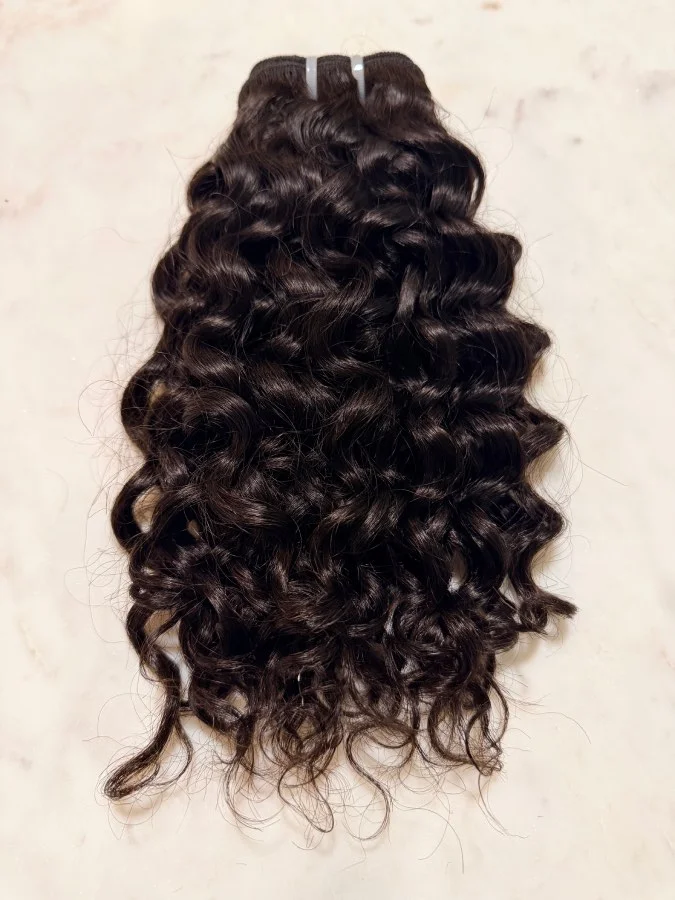
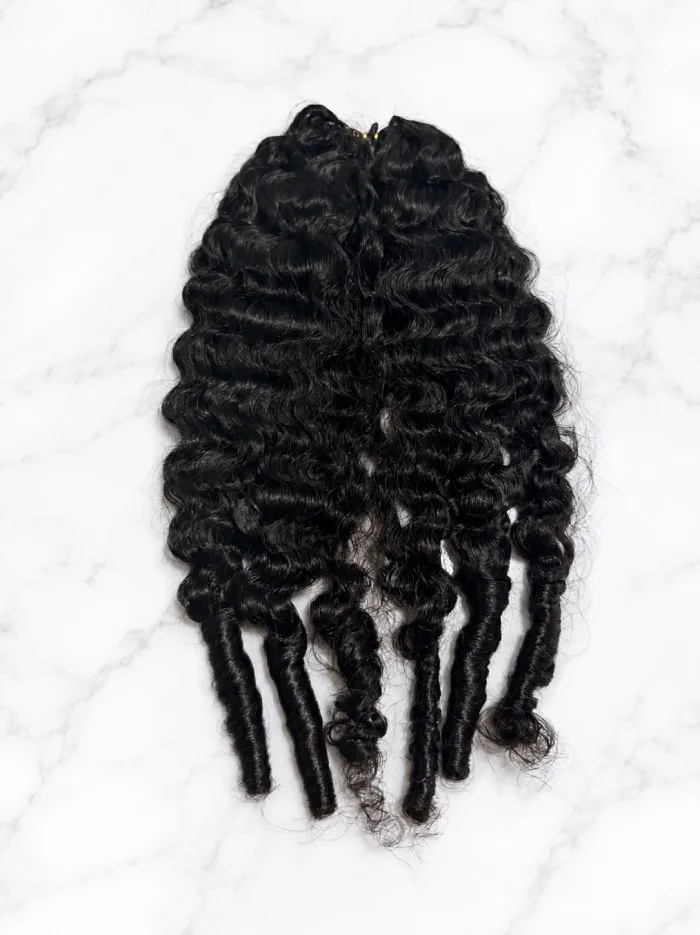
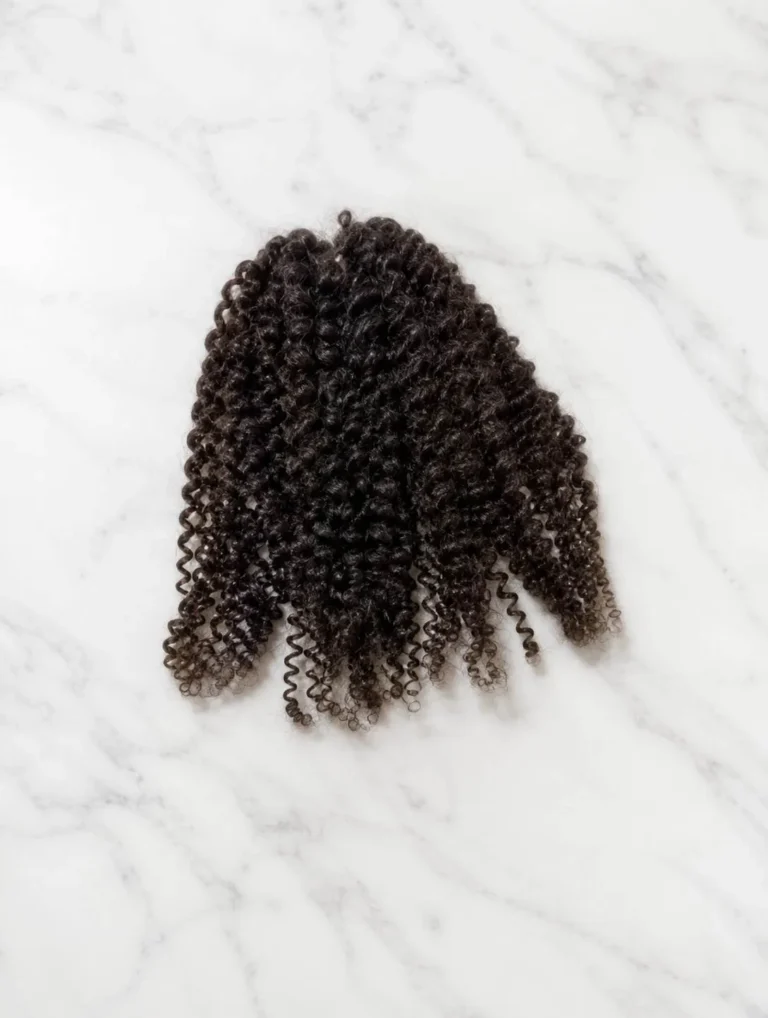
This is an area where texture-matching really matters. If your hair is naturally curly or coily, finding human hair extensions that match your curl pattern creates a much more seamless result. Some specialty vendors stock curly and coily human hair extensions specifically for this.
Caring for Human Hair vs Synthetic Extensions: What to Expect
How you care for your extensions affects how long they last, and the care routines are different for each type.
Caring for Human Hair Extensions
- Wash with sulfate-free shampoo and a moisturizing conditioner.
- Detangle gently from ends to roots before washing.
- Avoid sleeping in them unless they’re a semi-permanent method (like tape-ins or sew-ins).
- Use a heat protectant before any heat styling.
- Store clip-ins in a bag or box, not loose in a drawer.
Caring for Synthetic Extensions
- Use products specifically made for synthetic hair; regular shampoos and conditioners can damage the fibers.
- Keep heat tools away unless the product is explicitly labeled heat-resistant.
- Detangle gently and infrequently; synthetic fibers are more fragile than real hair.
- Don’t sleep in them; friction accelerates wear significantly.
- Store flat or loosely coiled to preserve the set style.
One thing to note: synthetic extensions can develop a sheen over time that starts to look artificial. There’s not much you can do to reverse that; it’s a natural result of the fiber aging.
A Quick Side-by-Side Comparison
| Feature | Human Hair Extensions | Synthetic Hair Extensions |
| Appearance | Very natural | Can look artificial |
| Heat styling | Yes fully compatible | Limited or none |
| Coloring | Yes | No (usually) |
| Lifespan | 1-3 years | 1-6 months |
| Cost | Higher upfront | Lower upfront |
| Best for | Daily wear, long-term use | Events, occasional use |
| Texture matching | Excellent | Moderate |
FAQ: Human Hair Extensions vs Synthetic Hair
Q: What is the main difference between human hair and synthetic hair extensions?
Human hair is real and fully styleable. Synthetic is man-made, cheaper, and limited in heat and color use.
Q: Are human hair extensions worth the higher price?
Yes, for regular use, they last far longer, style better, and look more natural than synthetic options.
Q: Can you use heat tools on synthetic hair extensions?
Only on heat-resistant synthetic types and at lower temperatures. Standard synthetic hair melts or frizzes with heat.
Q: How long do human hair extensions last?
With good care, Remy human hair extensions typically last one to three years, depending on wear frequency.
Q: Can synthetic extensions be dyed?
Standard synthetic hair does not absorb regular hair dye. Some blends accept semi-permanent color with unpredictable results.
Q: Which extension type blends better with natural hair?
Human hair extensions, especially Remy blends, are the most natural because they match real hair texture and movement.
Q: Are synthetic extensions good for everyday wear?
They can be used daily, but they won’t last as long as human hair. Tangling and wear happen faster with regular use.
Q: What is Remy human hair, and why does it matter?
Remy hair has aligned cuticles, reducing tangling and giving a smoother, longer-lasting finish than non-Remy human hair.
Q: Which is better for people with natural or curly hair?
Human hair extensions with a matching curl pattern blend far better with natural textures than synthetic alternatives.
Q: How do I know if the human hair extensions I’m buying are real?
Buy from verified vendors, check for Remy labeling, and read independent reviews. Marketplace works with vetted sellers to reduce the risk of misleading products.
Making the Choice That Actually Works for You
There’s no universally “right” answer between human hair extensions and synthetic hair. The right choice is the one that fits your lifestyle, your styling habits, your budget, and your natural hair type.
Here’s the short version to walk away with:
- Choose human hair if you style often, want long-term wear, and need the most natural-looking result.
- Choose synthetic if it’s a one-time occasion, you’re experimenting, or you need to keep costs low right now.
Whichever direction you go, the vendor matters as much as the product type. If you’re ready to shop with confidence, The NiCa Collection brings together verified hair vendors in one place, making it easier to find quality extensions at the right price, without the guesswork.
Your hair, your rules. Just make sure you’ve got the right product to back it up.




Bubble Ponytail: How to Do It Step by Step
A bubble ponytail looks like it takes skill, but it is one of the easiest styles you can do at home. Nothing is braided. Nothing is twisted. You gather your
What is Weft Hair? Types, Benefits, Installation & Care
If you have spent any time researching hair extensions, you have run into the term weft hair. A weft is a row of hair strands joined together along one edge
3A vs 3B vs 3C Curls: Key Differences You Should Know
The difference comes down to curl size and tightness. 3A curls are loose and large, roughly the width of a piece of sidewalk chalk. 3B curls are tighter and springier,