

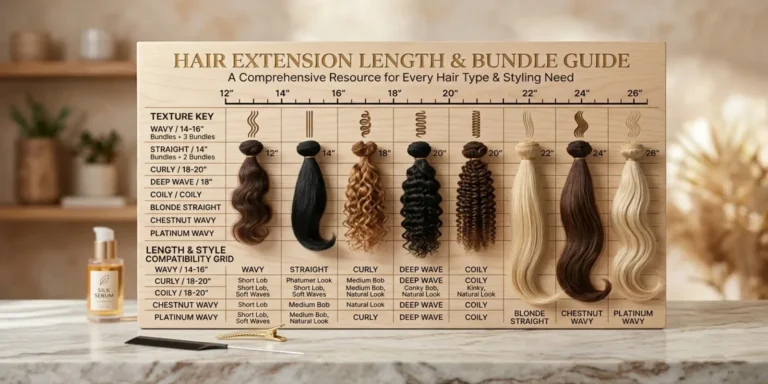
Choosing the right hair extension length can feel overwhelming, especially when you’re shopping online and can’t try anything on. The same 20-inch bundle can look completely different on different people and hair textures, making the process even more confusing. Whether you’re adding volume, length, or a dramatic transformation, understanding how a bundle length chart works is the first step to getting the look you actually want.
One of the biggest sources of confusion is that length isn’t one-size-fits-all. A 22-inch extension might hit mid-back on a petite frame but barely graze the shoulders of someone taller. Similarly, a curl pattern can make the same hair extension length chart measurement appear several inches shorter than it actually is. This guide breaks down everything you need to know about reading a hair extension length chart, so you can shop with confidence and get results that match your vision.
Hair Extension Length Chart
Not sure where to start? Use this quick reference bundle length chart to get a general idea of how common extension lengths relate to body placement. Keep in mind that results vary based on your height, hair texture, and how the extensions are installed.
| Length | Body Placement | Best For |
| 10″ | Chin to jaw | Bob styles, face framing |
| 12″ | Jaw to collarbone | Short chic styles |
| 14″ | Collarbone length | Classic bob, daily wear |
| 16″ | Just below the collarbone | Natural shoulder length |
| 18″ | Upper chest/shoulder | Every day medium-length |
| 20″ | Mid-chest | Most popular everyday length |
| 22″ | Lower chest | Long, flowing look |
| 24″ | Top of ribcage | Glamorous long hair |
| 26″ | Mid-back | Statement long hair |
| 28″ | Lower back/waist | Extra long, dramatic |
| 30″ | Hip length | Ultra-long, high-impact |
Bundle Length Chart by Inches
When shopping for bundles, extensions are typically measured in inches from root to tip while the hair is straightened. Standard lengths range from 10 inches to 30 inches, and each increment makes a noticeable difference in the final look. Here is a detailed breakdown of the most commonly available bundle lengths and where they fall on the body for an average-height person (around 5’4″ to 5’6″).
| Inches | Average Placement | Style Category |
| 10″-12″ | Chin to collarbone | Short |
| 14″-16″ | Collarbone to just below the shoulders | Short-medium |
| 18″-20″ | Shoulder to mid-chest | Medium |
| 22″-24″ | Lower chest to ribcage | Long |
| 26″-28″ | Mid-back to lower back | Extra long |
| 30″ | Waist to hip | Ultra long |
Note: These measurements reflect straight hair. Curly or wavy textures will appear shorter due to shrinkage. Always account for your hair type when using this bundle length chart.
How to Measure Hair Extension Length
Hair extension length is always measured from root to tip in a straight, flat position. This is true whether the hair is straight, wavy, or curly. The measurement reflects the actual length of the strand, not how it appears when worn.
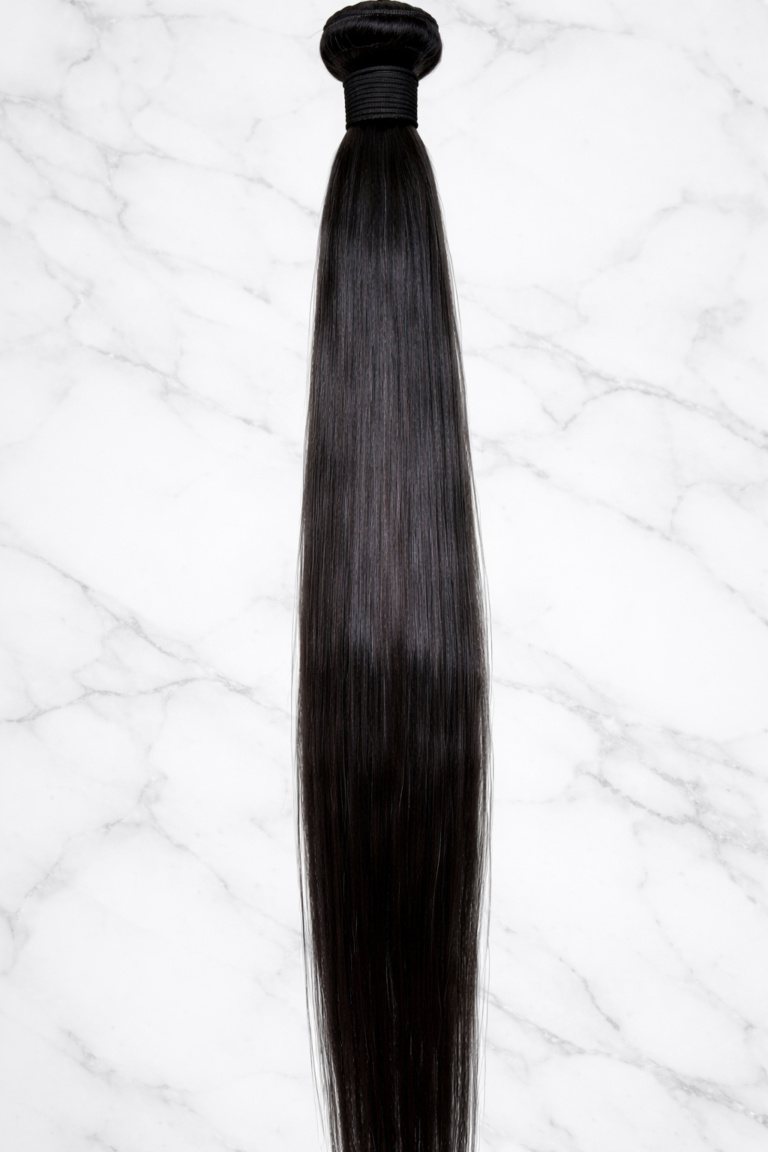
For straight hair, measuring is straightforward. Lay the weft or bundle flat on a smooth surface and measure from the top of the weft to the longest point at the bottom. This gives you the true length.
For curly or textured hair, measuring gets a bit more nuanced. A 20-inch curly bundle might only appear 14 to 16 inches long when worn, because the curl pattern shortens the visual length. To get an accurate measurement of a curly bundle, gently stretch a strand from root to tip without pulling it taut. This reveals the true length of the hair fiber.
When buying curly extensions, it is important to stretch the curl for an accurate reading. If you want the finished look to reach a certain length, choose a bundle that measures 2 to 4 inches longer than your target length to account for shrinkage.
How Different Lengths Look on the Body
Understanding placement on the body is just as important as knowing the inch measurement. The same length can sit in very different spots depending on your height. Someone who is 5’2″ will experience a 22-inch extension hitting closer to their waist, while someone who is 5’9″ might find the same bundle barely passes the collarbone. Use the breakdowns below as a general guide.
10-14 Inches (Short Lengths)
Short lengths ranging from 10 to 14 inches typically fall between the chin and the collarbone. These are ideal for bob hairstyles and blunt cuts that frame the face. At 10 inches, you’re looking at a classic jaw-length bob, while 12 to 14 inches provides a little more coverage and grazes the collarbone. These lengths work especially well for clip-in extensions used to add fullness to short styles, and they require fewer bundles to achieve a complete look.
16-20 Inches (Medium Lengths)
The 16 to 20 inch range is consistently the most popular choice for hair extensions. These lengths fall just below the shoulder to mid-chest level, creating a natural, everyday look that suits almost any lifestyle. At 18 inches, the hair rests softly at the shoulder, while 20 inches adds a bit more flow and movement. This range looks great on most face shapes and body types, transitions easily between casual and formal styles, and works across most hair textures.
22-26 Inches (Long Lengths)
Lengths from 22 to 26 inches fall between the lower chest and mid-back, creating a noticeably glamorous look. This range is popular for weddings, events, and anyone who wants long, flowing hair with real visual impact. At 24 to 26 inches, the hair starts to reach past the bra strap and approaches the mid-back, offering a dramatic silhouette. These lengths require proper maintenance and are best paired with high-quality bundles to prevent tangling and matting.
28-30 Inches (Extra Long)
Extra-long hair extensions measuring 28 to 30 inches reach from the lower back down to hip level. This length is bold, dramatic, and makes a serious style statement. While undeniably stunning, extra-long hair requires consistent upkeep. Detangling, moisturizing, and protective styling become daily priorities. This range is best suited for special occasions or experienced extension wearers who are ready to commit to the maintenance these lengths demand.

Straight vs Curly Hair Length Difference
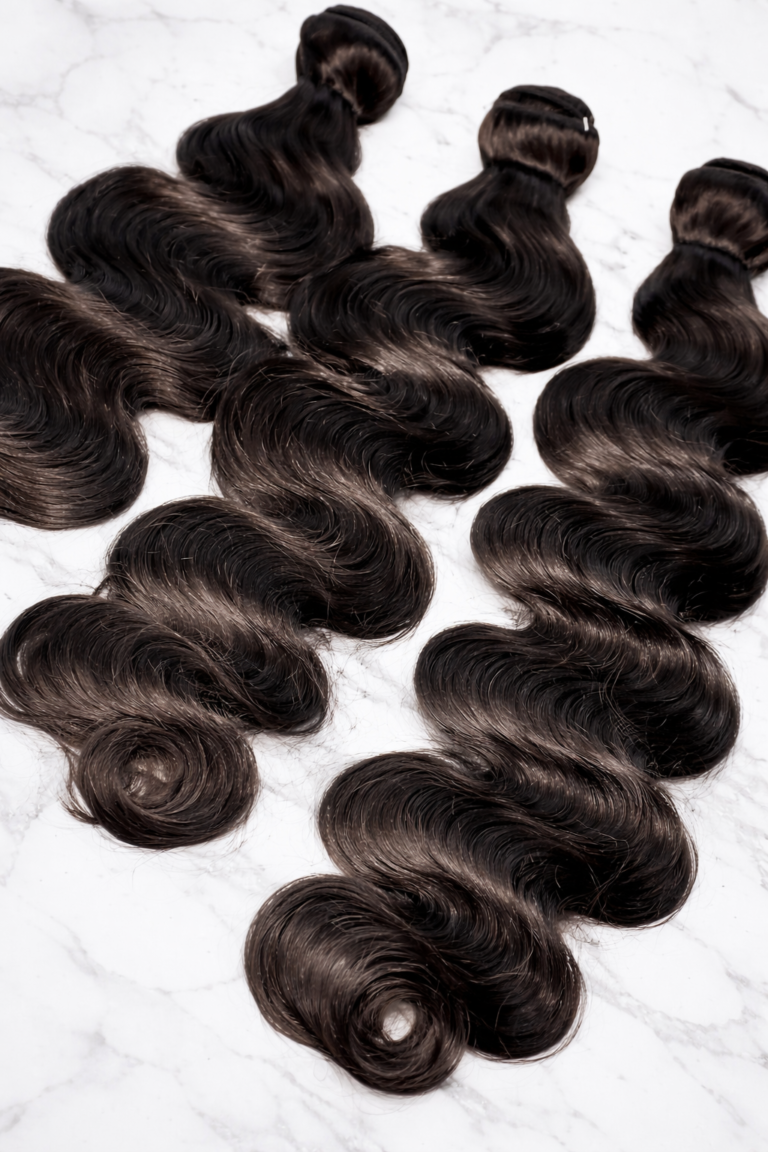
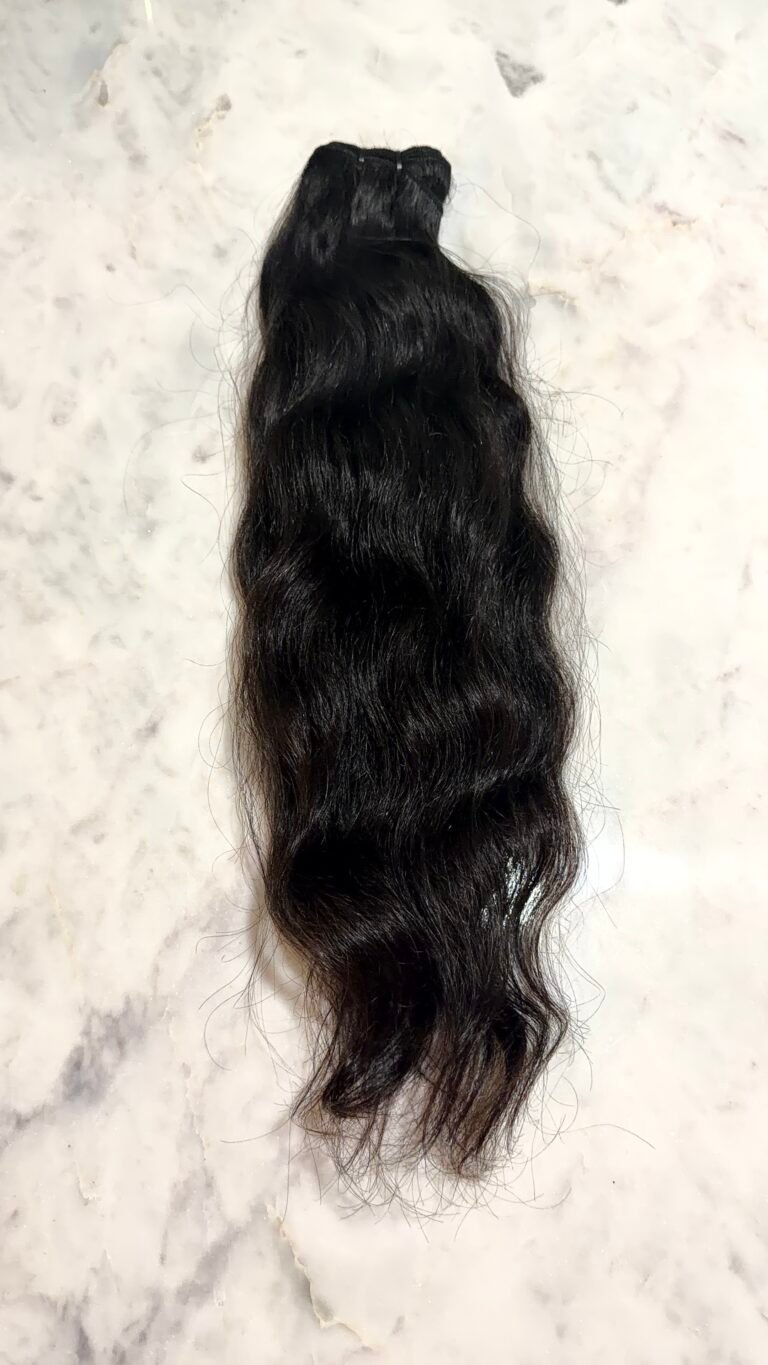
One of the most important things to understand about any hair extension length chart is that it measures straight, uncoiled hair. This means a curly bundle sold as 20 inches is only 20 inches when the hair is stretched flat. Once the curl springs back into shape, that same bundle can appear anywhere from 14 to 17 inches long, depending on the tightness of the curl pattern.
This phenomenon is called shrinkage, and it affects all textured hair, including natural kinky, coily, and wavy styles. Tighter curl patterns experience more shrinkage, sometimes losing 30 to 50 percent of their visual length. Looser waves tend to shrink much less.
Practical tip: If you are buying curly or wavy extensions and want them to hit a certain length when worn, size up by at least 2 to 4 inches. For tighter curl patterns, you may need to size up by 4 to 6 inches to get the visual length you are after. When in doubt, ask your stylist to help you assess the shrinkage factor of the specific texture you are considering before purchasing.
How Many Bundles Do You Need by Length
The number of bundles you need depends on the length you are installing, your head circumference, and the fullness you want to achieve. As a general rule, longer hair requires more bundles because the strands are finer and lighter toward the ends, meaning you need more hair to achieve the same density.
For a standard full sew-in or weave install, here is a general bundle guide:
| Length | Bundles Needed (Average) | Notes |
| 10″-14″ | 2 bundles | Short styles need less hair |
| 16″-18″ | 2-3 bundles | Standard for most head sizes |
| 20″-22″ | 3 bundles | Most common purchase |
| 24″-26″ | 3-4 bundles | Extra fullness recommended |
| 28″-30″ | 4+ bundles | More hair needed for density |
These numbers may increase if you have a larger head, want a fuller finish, or are adding a closure or frontal. Always consult with your stylist before purchasing to ensure you buy enough hair for your specific install.
Choosing the Right Length for Your Style
Picking the right length goes beyond just picking a number. Your face shape, height, and lifestyle all play a role in what will look and feel best on you.
- Face shape: If you have a rounder face, longer lengths tend to elongate and slim your features. Heart-shaped faces often look great with medium lengths that balance a wider forehead. Oval faces are incredibly versatile and can pull off almost any length.
- Height: Shorter individuals often find that very long extensions can overwhelm their frame. A 20 to 24 inch length typically flatters petite builds, while taller people can carry longer lengths with ease. Consider how the endpoint of the hair interacts with your body proportions.
- Lifestyle: If you are active, work with your hands, or prefer low-maintenance styling, a shorter to medium length, like 16 to 20 inches, will be much easier to manage than a 28-inch install. Longer hair also requires more product, more drying time, and more protective care. Be honest about how much time you are willing to invest before committing to a length.
Common Mistakes When Choosing Hair Extension Length
Even experienced extension wearers can fall into some common traps when selecting length. Here are the mistakes to watch out for:
- Ignoring texture: Buying a length based on a photo of straight hair when you plan to wear it curly is a recipe for disappointment. Always factor in how your installation texture will affect the final length.
- Not measuring your own hair: Skipping the step of measuring your natural hair length can cause the extensions to look disconnected or unnatural. Your extensions should blend seamlessly with your own hair at the root.
- Setting unrealistic expectations: A length that looks stunning on a model or influencer may not translate the same way on your body type or hair texture. Reference photos are helpful, but use them as inspiration rather than a blueprint.
- Buying too few hair bundles: Many buyers underestimate how many bundles they need, especially at longer lengths. Ending up with thin, sparse-looking ends is one of the most common complaints, and it is easily avoided by buying adequate bundles.
- Overlooking maintenance requirements: The longer the hair, the more care it needs. Many buyers fall in love with a length they see on someone else without considering the daily commitment that comes with it.
Final Tips for Choosing Hair Extension Length
Before you buy, keep these quick tips in mind to make sure you end up with a length you will actually love:
- Use a measuring tape to determine where specific lengths will fall on your own body before purchasing.
- If buying curly extensions, always size up by 2 to 4 inches to compensate for shrinkage.
- Check the bundle weight listed by the seller, as heavier bundles at the same length usually mean more hair and better fullness.
- Consult with a stylist if you are unsure, especially for your first install or if you are switching to a significantly different length.
- Take reference photos to your stylist showing the length and style you want, ideally on someone with a similar body type and hair texture.
Whether you are going for a chic short bob or floor-grazing lengths, understanding your hair extension length chart is the key to making a confident, informed purchase every time.
FAQs
What length hair extensions should I get?
The best length depends on your height, natural hair length, and the look you want to achieve. For a natural, easy-to-manage style, most people are happy with 18 to 22 inches. If you want something more dramatic, 24 to 26 inches offers a glamorous, long look. Use a measuring tape on your own body to see where each length would fall before making a decision.
How long is 20-inch hair?
For a person of average height (around 5’4″ to 5’6″), 20-inch straight hair extensions typically fall around the mid-chest to bra strap area. If the hair is curly or wavy, it will appear shorter due to shrinkage and may look more like 14 to 17 inches once styled.
Does curly hair look shorter in extensions?
Yes, absolutely. Curly and wavy extensions always appear shorter than their measured length once the curl pattern sets in. This is due to shrinkage, where the curl coils the hair and reduces the visual length. Tighter coils can shrink 30 to 50 percent, so a 22-inch curly bundle may look more like 13 to 16 inches when worn. Always size up when buying curly textures.
How many bundles do I need for a full sew-in?
Most full sew-in installs require 2 to 4 bundles, depending on the length and your desired fullness. Shorter lengths (10 to 16 inches) typically need 2 bundles, medium lengths (18 to 22 inches) usually require 3, and longer lengths (24 inches and above) often need 3 to 4 or more. If you are adding a closure or frontal, you may need one less bundle than usual.
Why does hair extension length look different in photos?
Photos can be misleading for several reasons. Models vary in height, which changes where any given length falls on the body. Lighting, angles, and editing can also make hair appear longer or fuller than it is in real life. Additionally, many promotional photos show straight hair, which always appears longer than the same length worn curly. Always reference real-life placement guides and consult a bundle-length chart based on your own measurements for the most accurate estimate.




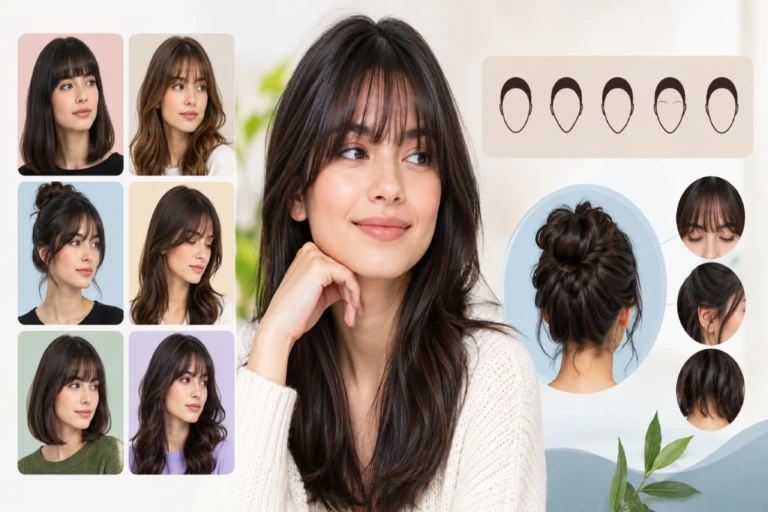
Bangs Hair: Types, Hairstyles and Face Shape Guide
Bangs hair is a section of hair at the front of the head that is cut shorter than the rest, so it falls over the forehead. In the UK and
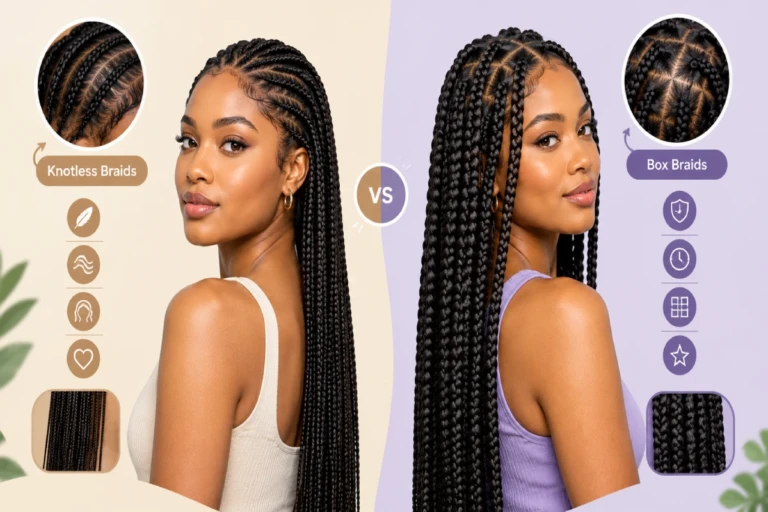
Knotless vs Box Braids: Difference, Lasting Time, Comfort and Style
The main difference between knotless vs box braids comes down to how each style starts at the root. Box braids start with a small knot that secures the extension hair

Difference Between 3C and 4A Hair: Types, Texture & Styles
If you’ve ever looked at a curl chart and felt like your hair belongs in two boxes at once, you’re in good company. 3C and 4A sit right next to