You’ve probably seen the term “double drawn” while shopping for extensions and wondered if that’s just marketing language or if it actually means something.
It means something. And once you understand the difference, it changes the way you look at every extension purchase going forward.
Double drawn hair extensions are not the same as regular extensions, even if they’re made from the same type of hair. The difference comes down to how the hair is processed before it ever reaches you, and that process has a direct effect on how full, thick, and natural the extensions look when you wear them.
This guide covers exactly what double drawn hair means, how it compares to single drawn, who it works best for, and how to decide whether it’s worth the price.
What Are Double Drawn Hair Extensions?
Double drawn hair extensions are extensions where the shorter hairs have been removed by hand twice so that the majority of strands in the bundle are the same length from root to tip.
Here’s why that matters:
When hair is naturally collected from donors, each bundle contains strands of varying lengths. Some strands are full-length. Others are shorter, maybe halfway down, or two-thirds of the way. In a standard bundle, all of those strands stay in together.
Double drawn processing removes the shorter strands through a careful, labor-intensive hand-sorting process. The result is a bundle where 70-80% (sometimes more) of the strands run the full length of the extension. The hair stays thick and full all the way to the ends, not just at the top.
The quick definition: Double drawn = consistent thickness from top to bottom, because shorter hairs have been removed.
Double Drawn vs Single Drawn Hair Extensions
Understanding the double-drawn hair meaning is a lot easier when you compare it directly to single-drawn.
What is Single Drawn Hair?
Single-drawn extensions are sorted once. The shortest hairs are removed once, but the bundle still contains a mix of strand lengths. As a result, single drawn extensions:
- Are thicker and fuller at the top (near the root/weft)
- Taper and thin out toward the ends
- Look and feel noticeably thinner in the bottom half
This isn’t a flaw exactly; it’s just what natural, unsorted hair looks like. Most of your natural hair does the same thing. The strands on your head are all different lengths, which is why your natural ends look less dense than your roots.
What is Double Drawn Hair?
Double drawn extensions go through a second round of hand-sorting. The shorter strands removed in the first pass are sorted again, and any remaining shorter pieces are taken out. The final bundle is made up of mostly full-length strands.
The result:
- Uniform thickness from root to tip
- Full, dense ends that don’t taper
- A more voluminous and polished finished look
- Less of a contrast between the top and bottom of the extension
Side-by-Side Comparison
| Feature | Single Drawn | Double Drawn |
| Thickness at roots | Full | Full |
| Thickness at ends | Tapered/thin | Full and consistent |
| Strand uniformity | Mixed lengths | Mostly full-length |
| Volume overall | Moderate | High |
| Blending with natural hair | Good | Very good |
| Price | Lower | Higher |
| Best for | Casual use, fine-end styles | Volume, thick styles, daily wear |
Why the Ends Matter More Than You Think
Most people focus on how extensions look at the top where they attach. But the ends are where the real difference shows up in everyday wear.
Think about wearing a ponytail. The ends of the extensions are what everyone sees. If the ends are thin and wispy, the ponytail looks sparse. If the ends are full and consistent, the ponytail looks lush, thick, and natural.
The same goes for wearing extensions down. The bottom few inches make or break the overall look. Thin, uneven ends can make even high-quality extensions look a little off.
Double drawn hair extensions solve that problem at the source. Because the shorter strands are removed before the extensions are even packaged, the ends stay consistently thick whether you’re wearing the hair straight, in a braid, in a bun, or loose.
Benefits of Double Drawn Hair Extensions
Here’s what you actually get with double drawn extensions compared to standard options:
- Fuller, thicker appearance throughout – The most obvious benefit. The hair looks and feels denser, even at lengths where single-drawn would start to thin out.
- More volume with fewer wefts – Because each weft is thicker and more consistent, you often need fewer of them to achieve the same level of fullness. This matters when you’re calculating what to order.
- Ends stay full longer – Single drawn hair tapers, and with wear and washing, the thinner ends get thinner. Double-drawn ends hold up better over time because there’s more hair there to begin with.
- Better blending with thick natural hair – If your own hair is naturally thick or has a lot of density, single-drawn extensions can look noticeably thinner by comparison. Double-drawn closes that gap significantly.
- More styling versatility – Braids, curls, waves, updos- every style benefits from having consistent thickness throughout the length of the extension. Double drawn handles all of these better.
- Cleaner, more polished finish – There’s a reason double-drawn is the preferred choice for professional stylists. The result just looks more deliberate and refined.
Who Should Consider Double Drawn Hair Extensions?
Double drawn isn’t for everyone, and that’s okay. Here’s how to figure out which side of the line you fall on.
Double-drawn makes the most sense if you:
- Have thick or high-density natural hair and need extensions to match
- Wear extensions regularly and want them to look good in every style
- Often wear your hair in ponytails, braids, or updos where the ends are visible
- Want to use fewer wefts overall while still achieving full coverage
- Are you investing in long-term extensions and want the best possible result
Single drawn might be the better choice if you:
- Have fine or thin natural hair where tapered ends actually blend more naturally
- Only wear extensions occasionally, like for events or photos
- Are you working with a tighter budget, and volume isn’t your main priority
- Prefer a softer, more natural-tapered look at the ends
The honest take: double drawn is a better product for most styling goals, but it costs more, and not every situation calls for it.
How Double Drawn Hair Is Made
One of the most common questions people have is why double-drawn extensions cost noticeably more. The answer is in the labor.
Step 1: Initial collection
Hair is collected from donors and bundled by length.
Step 2: First sorting
The shortest strands are removed by hand. This is standard for single-drawn extensions.
Step 3: Second sorting
The bundle goes through the sorting process again. Any remaining shorter strands are identified and removed. This second pass is what separates double-drawn from single-drawn. It’s time-intensive, done entirely by hand, and results in significant hair being removed from each bundle.
Step 4: Quality check
The finished bundle is checked for consistency. Only bundles that meet the thickness standard at both ends qualify as double-drawn.
This extra step, the second manual sort, is what you’re paying for. More labor, more time, and a smaller yield per bundle (because more hair is removed) all contribute to the higher price point.
What to Look for When Buying Double Drawn Extensions
Not everything labeled “double drawn” is the same quality. Here’s what to check:
- Look at the ends specifically – When you hold the weft, the bottom should feel almost as thick as the top. If the ends thin out dramatically, it’s not true double-drawn.
- Check the source – Remy human hair labeled as double-drawn will give you the best result. Non-Remy double-drawn exists, but the cuticle misalignment can cause tangling that negates some of the quality benefits.
- Read reviews carefully – Look for reviews that specifically mention the ends, not just the overall appearance.
- Buy from verified vendors – The extensions market has a lot of mislabeled products. Marketplaces that vet their sellers reduce the risk of paying double-drawn prices for single-drawn hair.


Double Drawn Hair Extensions and Different Hair Types
One thing that doesn’t get talked about enough is how your natural hair texture affects which extension style works best.
Straight hair: Double drawn extensions blend beautifully, and the consistent ends look polished in every style.
Wavy hair: The extra volume at the ends helps match the natural fullness of wavy textures. Single-drawn can look thin by comparison.
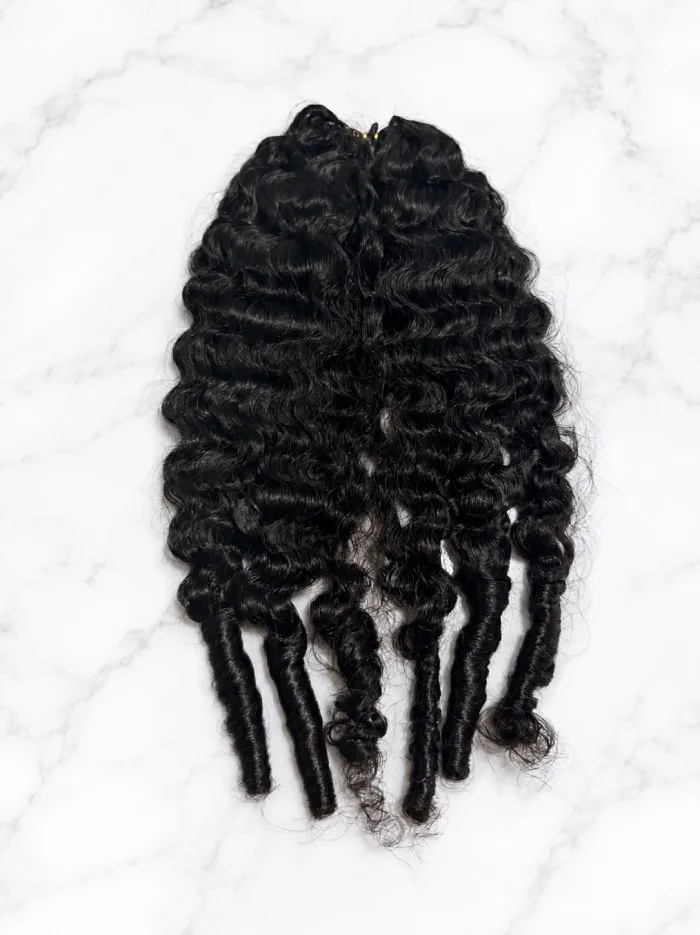
Curly or coily hair: This is where double drawn really earns its price. Curly extensions need that consistent fullness to look right. Thin ends on curly hair look especially sparse. Double-drawn curly extensions hold their shape and volume much better.
Fine hair: This is the one case where you might actually prefer single-drawn tapered ends, which can blend more naturally into finer hair without looking too thick or obvious at the attachment points.
FAQ: Double Drawn Hair Extensions
Q: What does double drawn hair mean?
Double drawn means shorter strands have been removed twice by hand, leaving bundles with consistent thickness from top to bottom.
Q: Are double drawn extensions better than single drawn?
For volume and full ends, yes. For fine hair or occasional use, single drawn can be a more practical and cost-effective option.
Q: Why are double drawn hair extensions more expensive?
The extra hand-sorting process is labor-intensive and removes more hair per bundle, making production more costly overall.
Q: How can you tell if extensions are truly double drawn?
Hold the weft and compare the thickness at the top vs. the ends. True double drawn should feel nearly equal throughout.
Q: Do double drawn extensions last longer than single drawn?
They tend to because the ends are denser; they hold up better with repeated washing, styling, and daily wear.
Q: What percentage of strands are full length in double drawn hair?
Typically, 70-80% or more of the strands in a double drawn bundle run the full length of the extension.
Q: Is double drawn hair always human hair?
No, but double-drawn Remy human hair is the highest-quality combination you can get for a natural look and longevity.
Q: Can I use double drawn extensions with curly or natural hair?
Yes, curly and coily textures benefit especially well from double drawn, as the consistent volume matches natural fullness better.
Q: Do you need fewer wefts with double drawn extensions?
Often yes, because each weft is thicker and fuller, you may need fewer wefts to achieve the same coverage as a single-drawn.
Q: Is the double drawn label regulated or standardized?
No, there’s no industry-wide standard. This is why buying from verified sellers matters; not every product labeled double drawn lives up to it.
The Bottom Line on Double Drawn Hair
Double drawn hair extensions are worth understanding, not because they’re always the right choice, but because knowing what they are puts you in a much better position to buy smart.
If you want thick, consistent, full-bodied hair that looks polished at every length, double drawn is genuinely the better option. If your needs are simpler, occasional wear, fine hair, or a tighter budget, single drawn does the job without the premium price.
Whatever you decide, the product quality behind the label matters just as much as the label itself. If you’re ready to explore double-drawn options from vetted vendors, The NiCa Collection is a good place to start: a curated marketplace where you can compare products and buy with confidence.
Know what you’re buying. Wear it well.



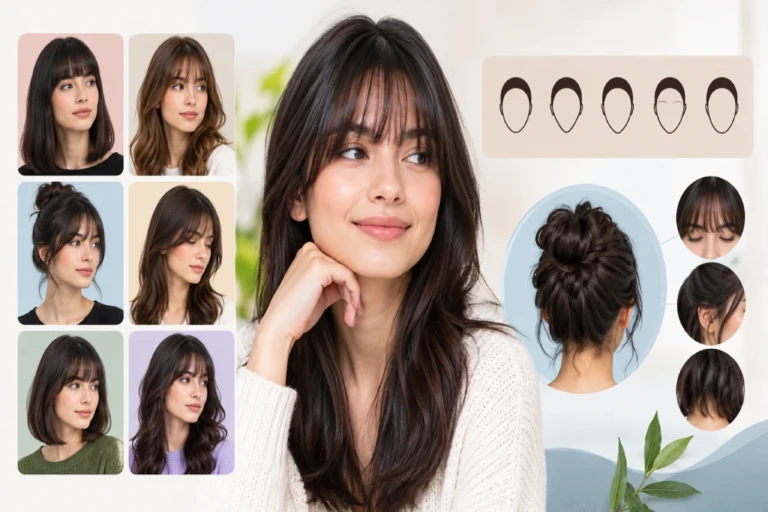
Bangs Hair: Types, Hairstyles and Face Shape Guide
Bangs hair is a section of hair at the front of the head that is cut shorter than the rest, so it falls over the forehead. In the UK and
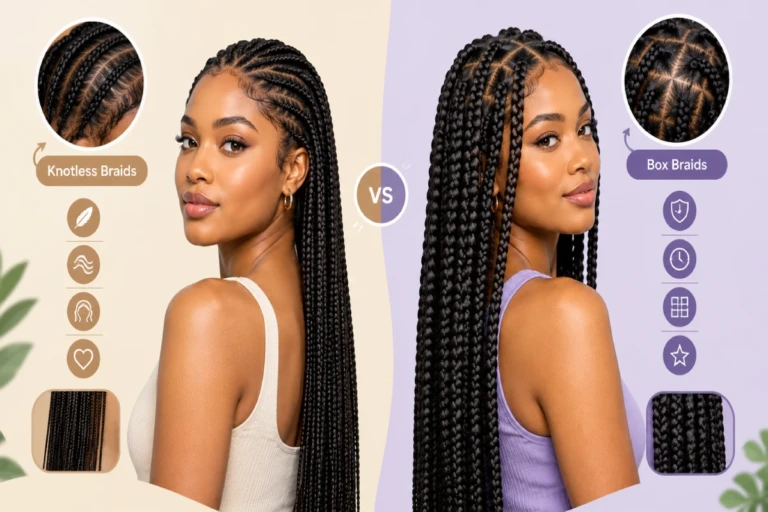
Knotless vs Box Braids: Difference, Lasting Time, Comfort and Style
The main difference between knotless vs box braids comes down to how each style starts at the root. Box braids start with a small knot that secures the extension hair
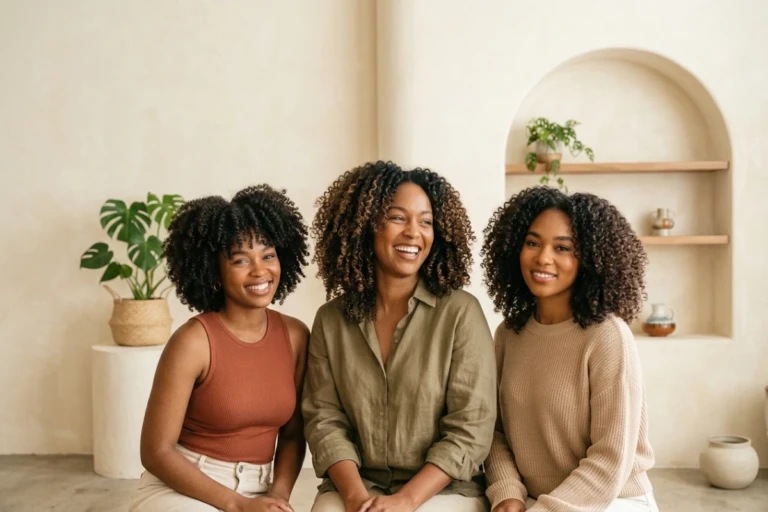
Difference Between 3C and 4A Hair: Types, Texture & Styles
If you’ve ever looked at a curl chart and felt like your hair belongs in two boxes at once, you’re in good company. 3C and 4A sit right next to